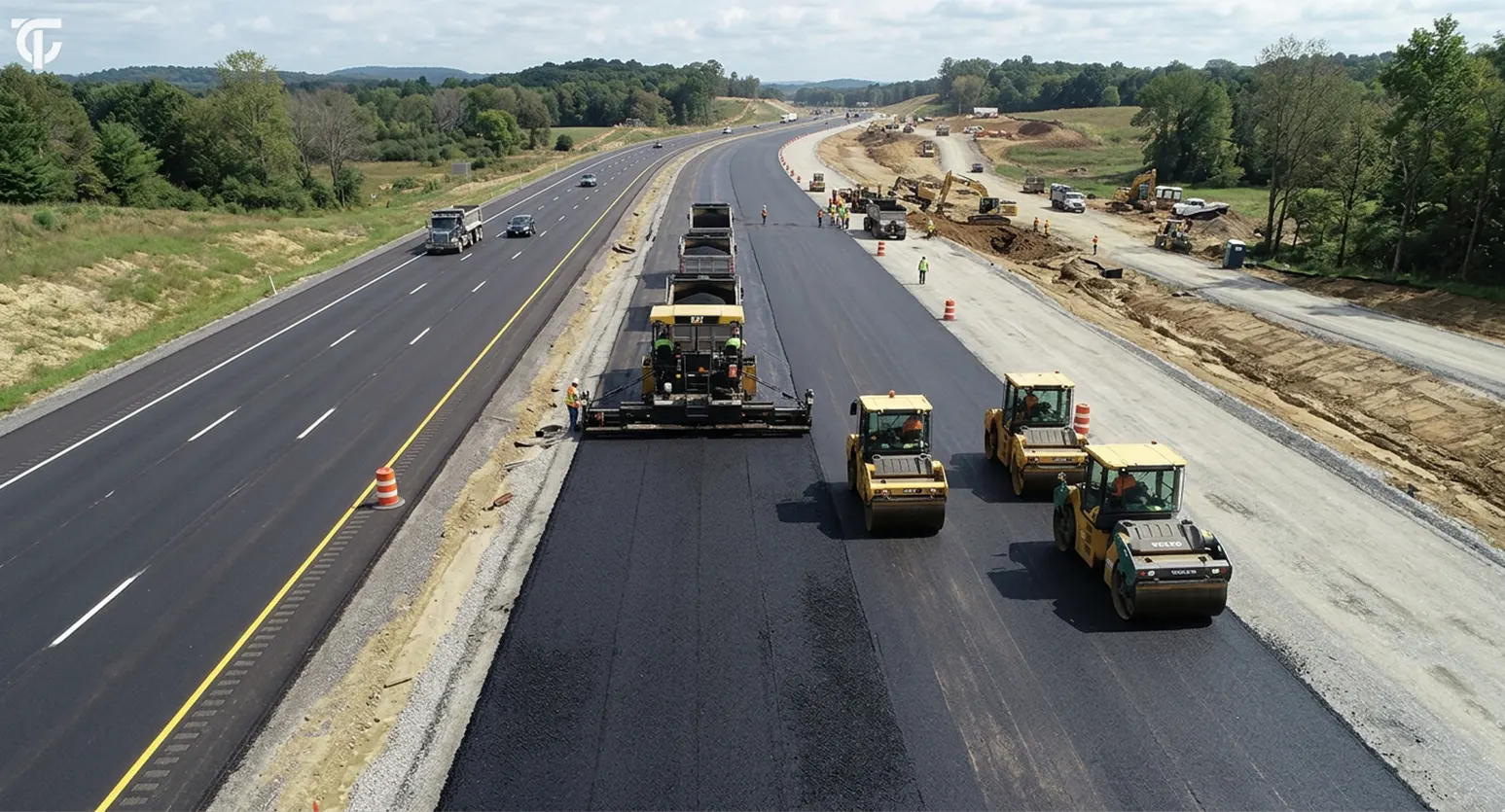

Roads are built to withstand years of traffic, changing weather, and continuous wear. Roads look simple from the outside: a smooth surface, painted lines, moving traffic. But underneath every durable road is a carefully selected combination of materials that keeps it stable through heat, rain, pressure, and years of use.
Choosing the right types of road materials is one of the most important decisions in road construction because it directly affects safety, surface durability, long-term performance, and maintenance costs. A material that performs well in one location may not deliver the same results in another, making proper selection essential for reliable infrastructure.
Why Road Material Selection Matters
Road material selection is not only about construction. It also affects how often a road needs repairs, how safe it feels in the rain, and how well it handles constant vehicle traffic. Highways carrying heavy trucks need stronger support than small rural roads. Areas with frequent rainfall require better drainage systems and stronger road foundation layers.
Engineers often select road surface materials based on climate, traffic loads, maintenance expectations, and construction budgets. A road that performs well for years usually starts with the right material choices from the ground up.
- Heavy traffic loads significantly accelerate pavement wear over time. Roads carrying freight trucks or industrial traffic often develop cracks, rutting, and surface fatigue much faster when weaker materials are used.
- Climate also changes everything. Asphalt roads in extremely hot regions may soften during summer, while freezing temperatures can create cracks in concrete surfaces.
- Safety is another factor that often gets ignored until problems appear. A road with low skid resistance becomes dangerous during wet weather. Even good-looking roads can become unsafe if the surface materials fail to maintain enough friction for vehicles.
- Budget matters too, but the cheapest material is rarely the best long-term option. Many contractors now focus on lifecycle performance instead of only initial construction cost.
This guide explains the most common road construction materials, where they are used, and the advantages and limitations of each.
Different Types Of Road Materials Used in Construction
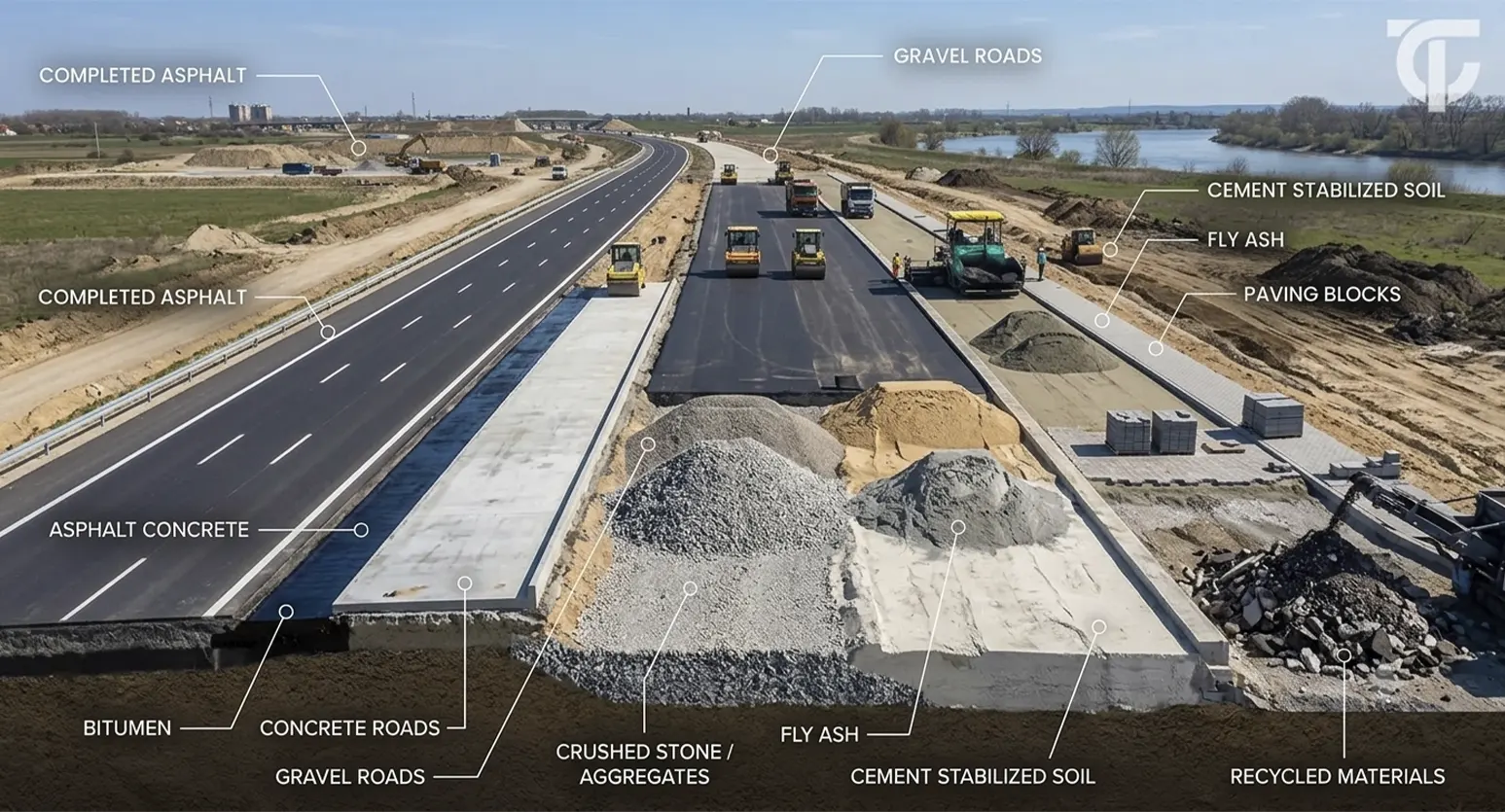
Road construction relies on a combination of materials that work together to create a stable, durable, and safe driving surface. Many different types of road materials are used in highway and street construction today. Some materials form the finished layer that vehicles travel on, while others strengthen the supporting structure beneath it. Most modern roads actually use multiple layers of materials working together.
Below are the most commonly used construction process materials, including sub-base layers, stabilization materials, and surface layers.
- Asphalt Concrete
- Concrete
- Gravel
- Bitumen
- Crushed Stone / Aggregates
- Sand
- Fly Ash
- Cement Stabilized Soil
- Paving Blocks
- Recycled Materials
✅ Asphalt Concrete
Asphalt concrete is one of the most widely used road surface materials in the world. It combines aggregates with bitumen to create a flexible pavement surface that handles daily traffic effectively.
💡 Did You Know?
According to the Asphalt Pavement Alliance, approximately 94% of paved roads in the United States are surfaced with asphalt. Its popularity comes from its cost-effectiveness, quick installation, and ability to handle varying traffic conditions while maintaining good surface durability.
One reason contractors prefer asphalt is its flexibility. It expands and contracts better under changing temperatures compared to rigid surfaces. Another advantage of asphalt concrete is its ability to provide reliable skid resistance when properly maintained. This helps improve vehicle control, particularly during wet weather. Repairs are also simpler and less expensive.
The downside is that asphalt surfaces may soften in extreme heat and usually require periodic resurfacing after years of traffic exposure.
Common uses:
- Highways
- Urban roads
- Residential streets
- Parking lots
- Airport pavements
Advantages:
- Fast construction and reopening to traffic
- Smooth and comfortable driving surface
- Easier and less expensive to repair than concrete
- Good noise reduction characteristics
Limitations:
- Requires periodic resurfacing
- Can soften under extreme heat
- May develop cracks if maintenance is delayed
✅ Concrete
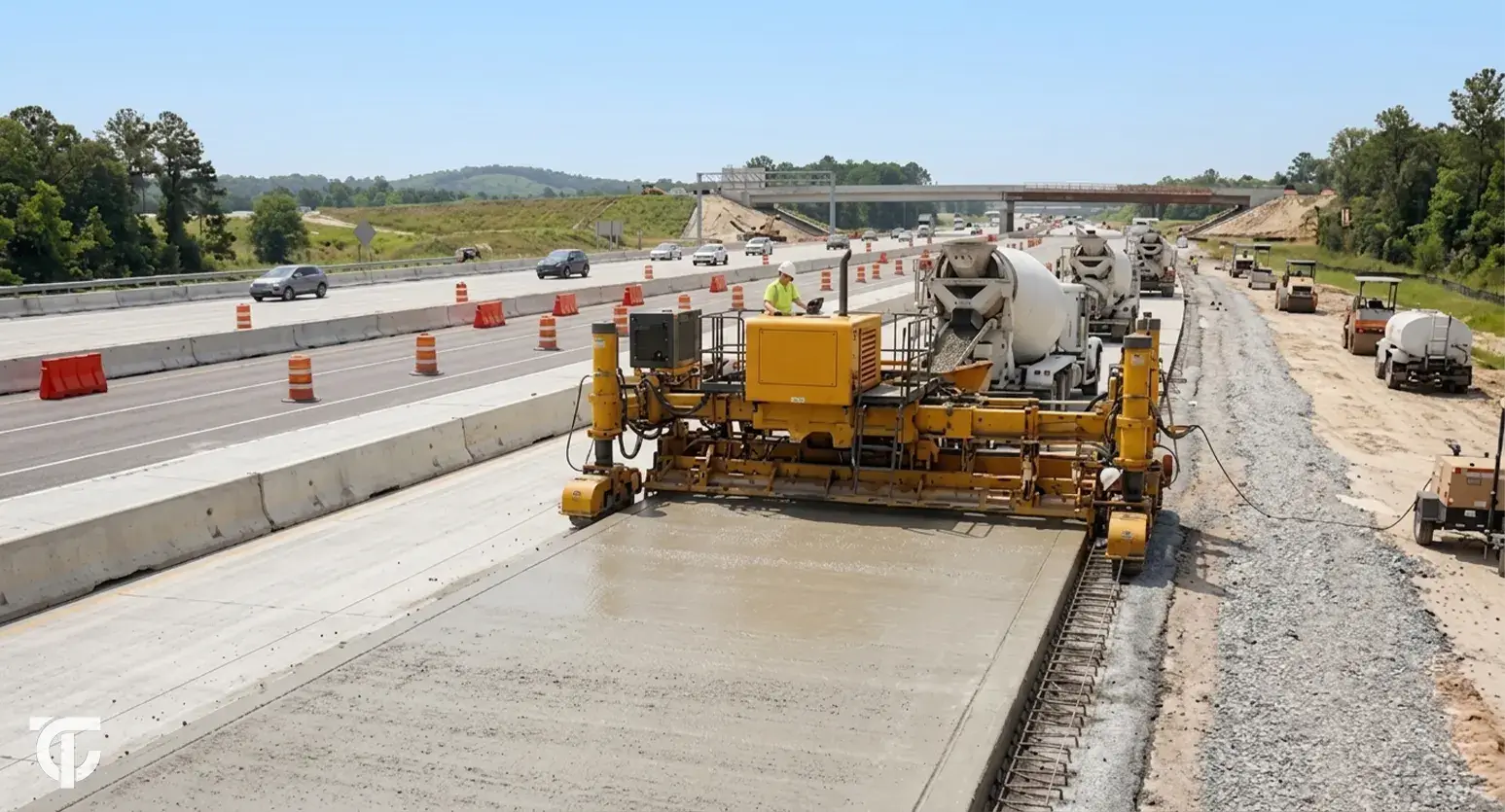
Concrete is one of the most durable materials used in road construction. It is mainly used to build rigid pavements, where concrete slabs form the main structural surface of the road. Its high strength and load-bearing capacity make it suitable for highways, industrial areas, and roads that carry frequent heavy traffic. Concrete pavements can resist deformation better than many flexible pavement systems because the rigid slabs distribute vehicle loads across a wider area of the road foundation. When properly designed, constructed, and maintained, concrete can provide a long service life while maintaining good structural integrity.
Concrete also performs well under heavy axle loads, high temperatures, and exposure to fuel spills. However, it generally costs more to construct than asphalt pavement, requires curing time before opening to traffic, and repairs can be more complex because damaged sections may require partial slab replacement rather than simple patching.
Common uses:
- Interstate highways
- Industrial roads
- Freight corridors
- Bus lanes
- Airport runways
Advantages:
- Long service life
- Excellent load-bearing capacity
- Lower long-term maintenance requirements
- Performs well under heavy commercial traffic
Limitations:
- Higher construction cost
- Longer curing time before opening
- Repairs are more complex than asphalt
✅ Gravel
Gravel is a common road-construction material made from crushed stone and other suitable aggregates. It is often used for rural roads, agricultural routes, forestry roads, and other low-traffic applications where a fully paved surface isn’t necessary. Gravel is relatively inexpensive and easy to place, making it a practical option for remote areas and temporary roads.
When properly graded and compacted, it can provide a functional, affordable road surface. However, they require regular maintenance because traffic and rainfall can cause dust, potholes, ruts, and uneven sections. Despite these limitations, gravel remains a practical road construction material for locations where low cost and simple maintenance are important.
Common uses:
- Rural roads
- Agricultural access roads
- Forestry routes
- Temporary construction roads
Advantages:
- Lower installation cost
- Easy to repair
- Suitable for low-volume traffic
- Can be built quickly
Limitations:
- Produces dust in dry conditions
- Requires regular grading
- Less comfortable for high-speed travel
- Not suitable for heavy traffic volumes
✅ Bitumen
Bitumen acts as a binding material in many flexible pavement systems. It helps hold aggregates together and creates water-resistant surfaces. It is valued because of its pavement resilience and ability to handle movement under traffic pressure.
Bitumen-based surfaces are commonly used on roads that require flexibility and smoother surface finishes. The material performs well under moderate traffic but may deteriorate faster under extreme heat or poor drainage conditions.
Common uses:
- Asphalt pavement production
- Surface dressing
- Road resurfacing
- Waterproofing pavement layers
Advantages:
- Strong adhesive properties
- Flexible under normal traffic conditions
- Helps resist moisture penetration
- Supports smooth pavement construction
Limitations:
- Temperature-sensitive
- Can oxidize with age
- Requires quality control during application
✅ Crushed Stone and Aggregates
Crushed stone forms the backbone of many road foundation systems. These materials are used in sub-base and base layers to provide structural support. Angular crushed stone typically provides better interlocking and load distribution than rounded materials, making it a preferred choice for many highway construction projects.
Aggregates improve drainage and help distribute vehicle loads evenly throughout the pavement structure. Without properly compacted aggregates, even strong surface layers may fail prematurely. The size, shape, and quality of aggregates directly influence the stability of the finished road.
Common uses:
- Base courses
- Sub-base layers
- Highway foundations
- Drainage layers
Advantages:
- Excellent structural support
- Improves load distribution
- Enhances drainage performance
- Widely available and cost-effective
Limitations:
- Requires proper compaction
- Performance depends on aggregate quality
- Improper grading can reduce stability
✅ Sand
Sand may look simple, but it plays an important role in road construction. It is commonly used beneath paving materials to improve leveling, drainage support, and compaction. In some projects, sand helps create a stable foundation before heavier materials are added. Engineers often combine sand with other types of road construction materials to improve load distribution and moisture control.
Although sand contributes to overall stability, it has limited load-bearing capacity on its own. Its main limitation is lower strength when used alone under heavy traffic conditions. For this reason, it is commonly combined with aggregates, gravel, or stabilizing agents to create a stronger pavement system.
Common uses:
- Bedding layer for pavements
- Sub-base preparation
- Soil improvement
- Drainage layers
Advantages:
- Readily available in many regions
- Supports proper drainage
- Helps create level construction surfaces
- Easy to compact when properly graded
Limitations:
- Low structural strength by itself
- Can erode if not adequately protected
- Requires additional materials for heavy-duty roads
✅ Fly Ash
Fly ash is an industrial byproduct commonly used in stabilization and pavement reinforcement work. When mixed with soil or cement, fly ash increases pavement resilience by improving strength, reducing shrinkage, and enhancing long-term road durability.
Many modern infrastructure projects also use fly ash to reduce environmental waste. Its effectiveness depends heavily on proper mixing and moisture control during construction. Engineers evaluate soil characteristics before determining whether fly ash is suitable for a particular project.
Common uses:
- Soil stabilization
- Embankment construction
- Road base improvement
- Lightweight fill applications
Advantages:
- Improves soil strength
- Reduces material waste through recycling
- Can lower construction costs
- Supports sustainable infrastructure practices
Limitations:
- Performance depends on proper mix proportions
- Not suitable for every soil type
- Requires careful quality testing before use
✅ Cement-Stabilized Soil
Cement-stabilized soil is created by mixing cement with existing soil to improve strength and surface durability. This method is often used in road foundation preparation where natural soil conditions are too weak for direct pavement support.
Many highway projects rely on stabilized soil to reduce future maintenance problems. This approach is commonly used where native soils lack sufficient strength to support pavement systems. Once cured, the stabilized layer provides a reliable base for asphalt or concrete surfaces.
Common uses:
- Highway subgrades
- Industrial roads
- Rural road improvements
- Infrastructure rehabilitation projects
Advantages:
- Increases bearing capacity
- Reduces soil movement
- Extends pavement life
- Minimizes the need for imported materials
Limitations:
- Requires controlled mixing and curing
- Performance depends on soil characteristics
- Construction timing is critical for proper strength development
✅ Paving Blocks
Paving blocks are commonly used in pedestrian areas, parking spaces, sidewalks, and decorative roads. These blocks offer strong skid resistance and can handle moderate traffic effectively. Their attractive appearance and reliable surface durability also make them suitable for decorative and functional applications.
Unlike continuous asphalt or concrete pavements, damaged blocks can often be removed individually without rebuilding the entire surface. Permeable paving block systems can improve drainage because small gaps between blocks allow limited water movement. The main drawback is higher labor requirements during installation.
Common uses:
- Residential streets
- Sidewalks
- Parking areas
- Driveways
- Public plazas
Advantages:
- Easy to repair and replace
- Attractive appearance
- Good skid resistance
- Long service life with proper installation
Limitations:
- Higher installation labor
- Not ideal for high-speed highways
- Improper installation may lead to uneven surfaces
✅ Recycled Materials
Sustainability has become a bigger part of road construction over the last decade. Recycled asphalt, crushed concrete, reclaimed aggregates, and industrial waste materials are now used in many projects. When processed correctly, recycled materials can deliver reliable structural performance and contribute to more efficient road maintenance by supporting cost-effective rehabilitation projects.
These types of road construction materials help reduce environmental impact while lowering construction waste. Their suitability depends on material quality, processing methods, and project requirements. Highway agencies increasingly incorporate recycled materials into pavement designs where performance standards can be maintained without compromising safety or durability.
Common uses:
- Road rehabilitation
- Base and sub-base layers
- Asphalt production
- Sustainable highway projects
Advantages:
- Conserves natural resources
- Reduces construction waste
- Can lower project costs
- Supports environmentally responsible construction
Limitations:
- Quality varies with source material
- Requires thorough testing and processing
- Not every recycled product is suitable for every application
Comparison of Common Road Materials
Asphalt vs Concrete
| Parameters | Asphalt | Concrete |
| Installation Speed | Faster | Slower |
| Initial Cost | Lower | Higher |
| Maintenance | More frequent | Less frequent |
| Flexibility | High | Low |
| Lifespan | Moderate | Longer |
Gravel vs Bitumen
| Parameters | Gravel | Bitumen |
| Cost | Low | Moderate |
| Surface Smoothness | Rough | Smooth |
| Maintenance | High | Moderate |
| Drainage | Good | Moderate |
| Traffic Capacity | Lower | Higher |
Flexible Pavement vs Rigid Pavement
| Parameters | Flexible Pavement | Rigid Pavement |
| Material Type | Asphalt-based Layers | Concrete Slab Structure |
| Flexibilty | Bends Under Traffic Pressure | Remain Stiff Under Heavy Loads |
| Construction Cost | Lower | Higher |
| Maintenance | Regular Frequency | Lower Frequency |
| Durability | Moderate | Higher |
| Repair Work | Easier Repairs | Complex Repairs |
| Construction Time | Faster | Takes Longer |
| Common Applications | Urban Roads, Local Streets, Parking Areas | Highways, Industrial Roads, Airports |
Factors Affecting Road Material Selection
Selecting the right material affects more than construction costs; it directly influences how safely a road performs throughout its service life. Surface texture, structural strength, and drainage all contribute to vehicle stability, particularly during adverse weather.
🔍 Here’s Something Interesting
Road Safety Authorities have found that roads with poor skid resistance can significantly increase accident risk under wet conditions. As water reduces tire grip, surfaces that cannot provide adequate friction become more hazardous for drivers.
This is why engineers evaluate skid resistance, pavement texture, and drainage performance alongside structural requirements when selecting road materials. Every road project has different demands. Material selection usually depends on a combination of environmental, structural, and economic conditions. Some of the biggest factors include:
1. Climate Conditions
Hot temperatures may soften, while freezing climates can crack rigid surfaces. Moisture levels also influence drainage performance.
2. Traffic Load
Roads carrying buses and trucks require stronger pavement resilience than residential streets.
3. Drainage Requirements
Water is one of the biggest threats to road durability. Poor drainage weakens the sub-base and accelerates cracking.
4. Construction Budget
Some materials have lower installation costs but higher repair expenses later. Others cost more initially but last longer.
5. Maintenance Expectations
Busy highways often require materials that reduce future repair interruptions and improve long-term performance.
These choices are generally based on highway engineering principles used in infrastructure design and pavement management systems.
Road Maintenance and Durability
Even the highest-quality road materials require regular inspection and maintenance to achieve their expected service life. Constant traffic pressure, weather exposure, and water infiltration slowly weaken pavement layers over time. One of the biggest threats to pavement longevity is poor water management.
According to Pavement Engineering Research, poor drainage is one of the leading causes of pavement deterioration. Water that penetrates pavement layers weakens the supporting base, reduces structural strength, and accelerates cracking, pothole formation, and settlement.
Regular road maintenance helps extend pavement lifespan by addressing smaller issues before they become structural failures. Maintenance practices often include:
- Crack sealing
- Surface resurfacing
- Drainage cleaning
- Pothole repair
- Base stabilization
Investing in timely repairs is often far more economical than reconstructing an entire roadway after significant deterioration has occurred.
👉🏻 Interested in how modern infrastructure is planned and built?
Explore The Concrete Talk’s Civil Engineering and Infrastructure articles for more expert insights.
Final Thoughts
Road construction is rarely about using one perfect material everywhere. Climate, drainage, traffic loads, and maintenance expectations all influence the final decision. Understanding the right types of road materials helps contractors, engineers, and property developers build roads that stay safer and stronger for years.
The most successful infrastructure projects usually combine multiple layers and systems rather than depending on a single solution. Whether the project involves highways, industrial roads, rural access routes, or urban streets, selecting the proper material can reduce repair costs and improve long-term pavement performance.
The strongest roads are built with the right combination of materials, not just the strongest material.
Frequently Asked Questions
What are the most common types of road materials?
Road materials include asphalt, concrete, gravel, bitumen, crushed stone, and aggregates. These are selected based on traffic loads, climate conditions, and road durability requirements.
Which road material lasts the longest?
Concrete roads generally last longer than asphalt because of higher surface durability and better resistance to heavy traffic loads. However, they are more expensive to construct.
Why is asphalt commonly used in road construction?
Asphalt is widely used because it provides smooth driving surfaces, good skid resistance, quick installation, and easier road maintenance compared to other materials.
What is the difference between flexible pavement and rigid pavement?
Flexible pavement uses asphalt-based materials that bend under traffic loads. In contrast, rigid pavement uses concrete slabs that distribute loads more evenly across the road foundation.
How does drainage affect road durability?
Poor drainage weakens the road foundation and reduces pavement resilience, leading to cracks, potholes, and reduced road lifespan.