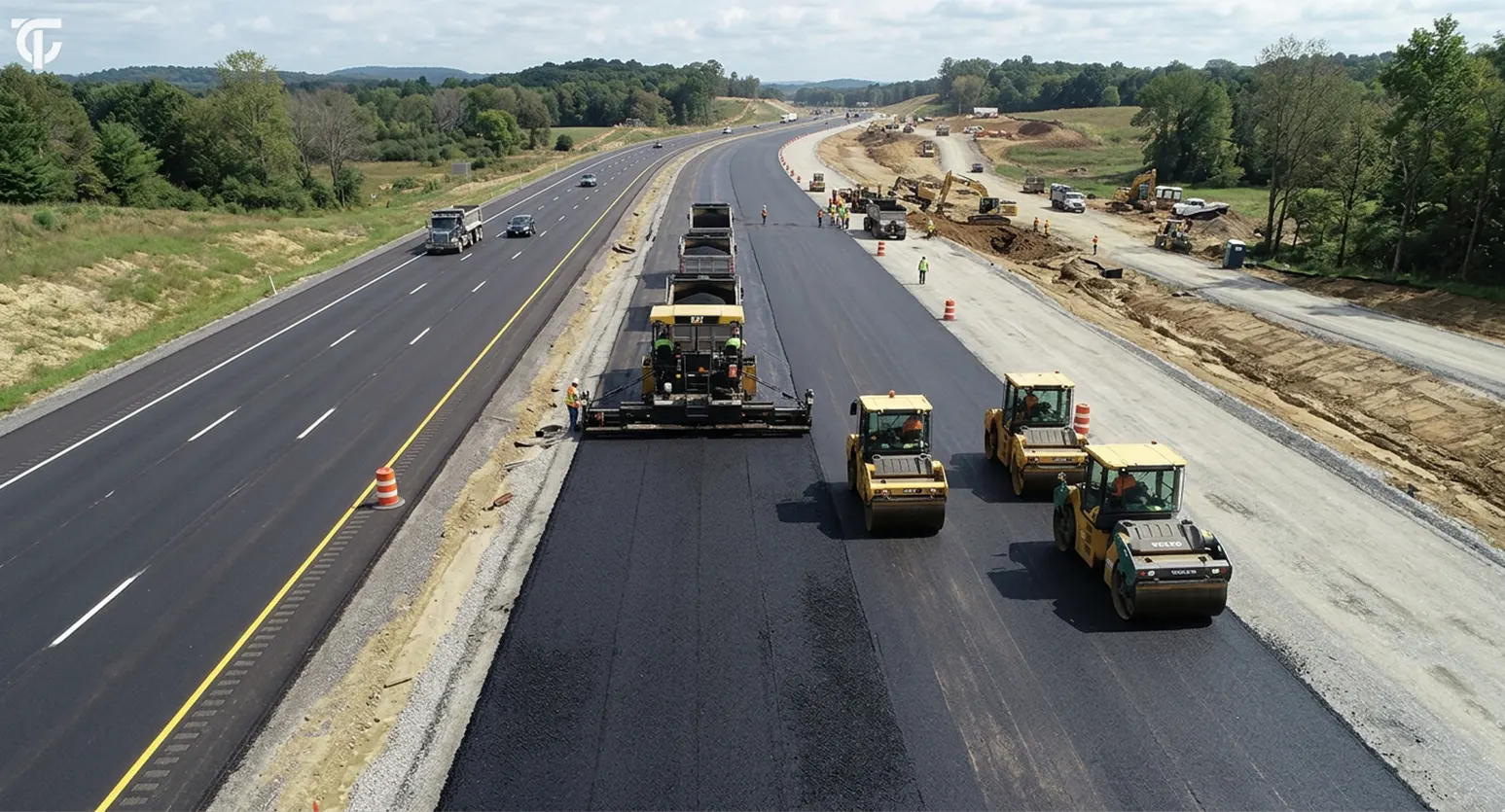

Every road trip, commute, or walk through a parking lot puts you in direct contact with asphalt concrete, even if you’ve never thought about what it is.
So, what is asphalt concrete? 🤔
Simply put, it’s a mixture of asphalt binder and mineral aggregates of stone, sand, and gravel combined and compacted to form a durable, flexible pavement surface. It’s the material beneath most roads, driveways, and parking areas you use every day.
But a good mix alone doesn’t guarantee good pavement. How well asphalt concrete performs depends on the pavement structure underneath it, the traffic it carries, drainage, material quality, and how carefully it’s built.
This article covers the main types of asphalt concrete, where it’s used, its advantages, its limitations, what shapes its long-term performance, and how it compares with Portland cement concrete.
Understanding Asphalt Concrete
Technically, asphalt concrete is a composite pavement material. It’s produced by combining mineral aggregate with asphalt binder, creating a mixture that can be placed and compacted into a solid pavement layer.
Here’s how the two main ingredients work together:
- Aggregate: Crushed stone, sand, and gravel form the structural skeleton of the mixture. It’s what gives the pavement its load-bearing strength.
- Asphalt Binder: Coats each aggregate particle and holds them together, creating a flexible, cohesive layer once compacted.
That combination is what separates asphalt concrete from asphalt itself. Asphalt, in the broadest sense, refers to the sticky, black binder material. Asphalt concrete is the finished product: aggregate and binder mixed and compacted into a usable pavement layer. Mixing up these two terms is one of the most common sources of confusion in construction writing, so it’s worth keeping the distinction clear from the start. Asphalt concrete is just one of several road materials used in construction, each suited to different conditions and budgets.
You’ll also come across the terms “asphaltic concrete” and “bituminous concrete“. These aren’t different materials; they’re alternate names for the same asphalt-bound aggregate mixtures used in pavement work. For instance, the Federal Highway Administration (FHWA) uses both “asphaltic concrete” and “bituminous concrete” to refer to dense-graded asphalt concrete. That said, not every mention of “asphalt” refers specifically to asphalt concrete, so context matters.
How Does Asphalt Concrete Work as Pavement?
Knowing what asphalt concrete is made of tells only half the story. The other half is how it actually behaves once it’s part of a working pavement.
Here’s the basic sequence: Vehicles apply loads to the pavement surface as they pass over it. The asphalt concrete layer takes that load and spreads it out instead of concentrating it in one spot. The aggregate particles within the mixture provide most of the structural skeleton, while the asphalt binder holds everything together so the layer can flex slightly under traffic without falling apart.
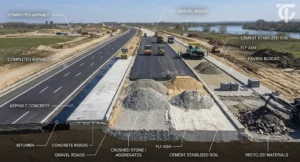
But the asphalt layer isn’t doing this job alone. Underneath it sits the rest of the pavement structure: The base course, subbase where applicable, and the subgrade, which supports and further distributes those loads. A well-designed pavement spreads traffic loads down through each of these pavement layers, reducing the stress that reaches the subgrade. If any one of these layers is poorly built, the whole system suffers, even if the asphalt surface itself was mixed and placed correctly.
That’s a point worth emphasizing, since many basic explanations skip it; pavement performance isn’t just about the asphalt on top. It’s about how well the entire structure surface, base, and subgrade works together to handle traffic loads over time.
Types of Asphalt Concrete
Not all asphalt concrete is the same. There are several types of asphalt concrete, and they’re typically classified by aggregate gradation essentially, how the aggregate particle sizes are distributed within the mix. Terms like Hot Mix Asphalt (HMA), Warm Mix Asphalt (WMA), dense-graded, and Stone Matrix Asphalt (SMA) often get lumped together as if they belong to a single classification system. They don’t.
Some of these terms describe aggregate gradation, while others like HMA and WMA describe the temperature at which the mixture is produced and placed. We’ll cover that distinction in the next section. For now, let’s focus on gradation-based classification, which the FHWA breaks down into dense-graded, open-graded, and gap-graded mixtures.
✅ Dense-Graded Asphalt Concrete
Dense-graded asphalt concrete is the type most people picture as a standard road surface. The aggregate sizes span a relatively continuous range, from coarse to fine, filling most of the voids in the mixture.
When properly designed, that structure gives dense-graded mixes relatively low permeability compared with open-graded mixtures. It’s a big reason dense-graded asphalt concrete is the default choice for general pavement applications, everything from residential streets to highway surfaces.
Within this category, mixes can lean toward a finer or coarser aggregate gradation, depending on the specific mix design and project requirements. Either way, the goal stays the same: A well-packed structure that resists water intrusion and holds up under repeated traffic loads.
✅ Open-Graded Asphalt Concrete
Open-graded asphalt concrete works differently. Instead of a continuous range of aggregate sizes, it uses a mix with fewer fine particles, leaving more interconnected void space throughout. That open structure matters because it lets water move through the mix rather than pool on the surface. Open-graded friction courses, a common application of this mix type, can help reduce surface water buildup, splash and spray from vehicle tires, and tire-pavement noise.
It’s worth being precise here: Not all open-graded asphalt is “porous asphalt“. Open-graded mixtures can be engineered for different levels of drainage and permeability, and specific products carry their own names and intended uses. Treating them as one interchangeable category oversimplifies a fairly nuanced part of pavement engineering.
✅ Gap-Graded Asphalt Concrete
Gap-graded asphalt concrete sits between dense- and open-graded mixes. Instead of a continuous distribution of aggregate sizes, certain intermediate particle sizes are reduced or left out entirely.
That gap in the gradation creates a different internal structure than a dense-graded mix, one that can be engineered to achieve specific performance characteristics, like added durability under heavy loading. The most well-known example of a gap-graded mixture is Stone Matrix Asphalt, which deserves a closer look on its own.
✅ Stone Matrix Asphalt (SMA)
Stone Matrix Asphalt (SMA) is a gap-graded asphalt mixture, not a separate, unrelated category, even though it’s often talked about that way. What sets SMA apart is its high proportion of coarse aggregate, which creates stone-on-stone contact within the mix.
That stone-on-stone structure gives SMA its reputation for rutting resistance and durability, especially on pavements that see heavy traffic or repeated loading, such as busy intersections and truck routes.
Pavement Interactive and the FHWA both describe SMA as a gap-graded mix associated with these performance characteristics. That said, SMA isn’t automatically the “best” choice for every project. Whether it makes sense depends on traffic conditions, budget, and the pavement’s specific performance goals.
Hot-Mix and Warm-Mix Asphalt; Where Do They Fit?
If you’ve spent any time researching asphalt concrete, you’ve probably run into Hot Mix Asphalt (HMA) and Warm Mix Asphalt (WMA) and wondered why they weren’t part of the types list above.
Here’s the reason: Dense-graded, open-graded, and gap-graded asphalt concrete describe aggregate structure. HMA and WMA describe something different: the temperature at which the mixture is produced and placed.
So dense-graded, open-graded, and gap-graded aren’t competing with HMA and WMA on the same list. They answer two separate questions: What does the aggregate structure look like, and how hot was the mix when it went down?
Conventional hot-mix asphalt is produced and placed at higher temperatures, which has long been the industry standard. Warm-mix asphalt technologies, by contrast, let producers make and handle asphalt mixtures at lower temperatures than conventional hot-mix practices; the exact temperature drop depends on the WMA technology used.
💡 Did You Know?
WMA has picked up real traction in the market. According to NAPA’s 15th Annual Asphalt Pavement Industry Survey, warm-mix asphalt technologies accounted for 40.2% of the estimated U.S. asphalt mixture market in 2024.
That’s a meaningful share of the industry choosing lower-temperature production. It’s worth knowing even if you never work with a paving crew, since it reflects where the industry is heading in terms of energy use and job-site handling.
How Is Asphaltic Concrete Pavement Constructed?
Building this kind of pavement isn’t just about laying down a mix and rolling it flat. It follows a defined sequence, and skipping steps or rushing them is one of the fastest ways to shorten a pavement’s service life.
1. Subgrade Preparation
Construction starts with the existing soil, or subgrade. Weak or problematic areas often need treatment before work continues, and proper compaction at this stage matters more than it might seem, since problems buried this deep are expensive to fix once the pavement is finished.
2. Base and subbase preparation
Next come the supporting layers: the base course and, where the pavement design calls for it, a subbase. These are prepared according to the pavement design, and their condition directly affects how the finished pavement performs.
3. Asphalt mixture production
Once the site is ready, an appropriate plant produces the designed mixture. That process deserves its own article; we’ll cover mix production in detail separately. For now, it’s enough to know that the mixture reaching the site should match the design specified for the project.
4. Placement
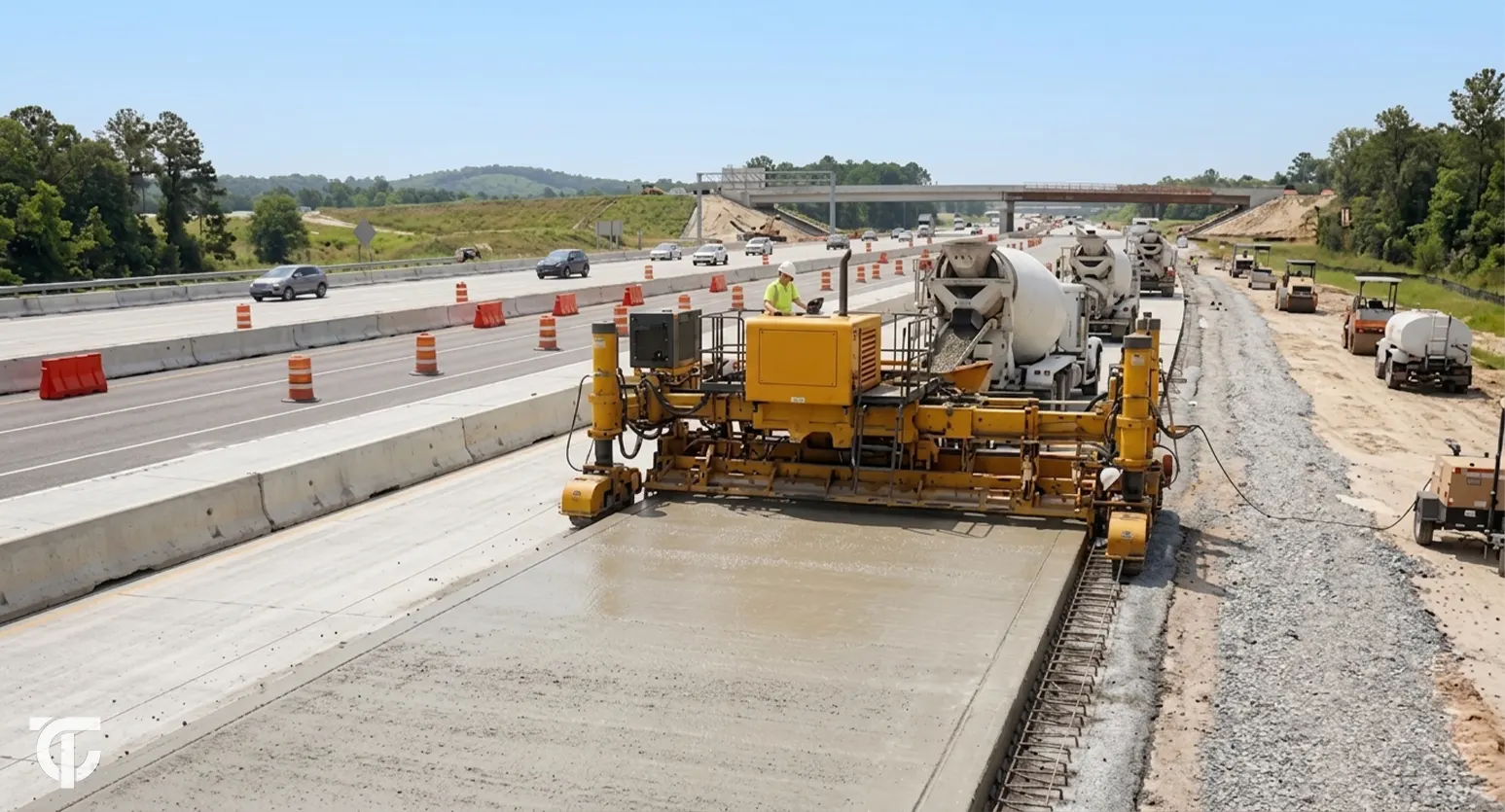
The mixture is delivered to the site, where a paver places it at the required thickness and profile. This is the step where the asphaltic concrete pavement actually starts taking shape as a continuous surface, rather than just a stockpile of mix.
5. Compaction
Rollers compact the freshly placed mixture, and proper compaction is what allows the pavement to reach its intended density. Skipping or rushing this step is one of the more common causes of premature rutting and reduced pavement performance later on.
6. Cooling and opening to traffic
Finally, the pavement needs to cool to an appropriate temperature before it’s opened to traffic. Opening too early, while the mix is still soft, can undo much of the work that went into building it properly.
Where Is Asphalt Concrete Used?
Asphalt concrete’s flexibility and relatively fast construction make it a practical choice across a wide range of paved surfaces. However, the mix and design must match the application.
Roads and Highways
These see the heaviest and most consistent traffic loading, so asphalt concrete’s ability to handle repeated loads while providing a smooth riding surface makes it a common choice from local streets up through interstate highways.
Parking Areas and Driveways
Flexible pavement works well here, and asphalt’s relatively straightforward maintenance, patching, sealing, and resurfacing fits the lower-traffic, cost-conscious nature of most parking and driveway projects.
Airport Pavements
Airport surfaces face demanding loads from aircraft, so mix selection is driven heavily by each project’s specific requirements, including aircraft type, traffic volume, and load configuration.
Streets, intersections, and other paved transportation surfaces round out the list, but the underlying principle stays the same: The right mix depends on the traffic, loading, and performance requirements of that specific application. What works for a quiet residential street won’t necessarily be the right call for a busy intersection or an airport runway.
Advantages of Asphalt Concrete
Asphalt concrete’s popularity as a paving material comes down to a handful of practical advantages, as long as it’s properly designed, built, and maintained.
Durability and Pavement Performance
Properly designed and constructed asphalt pavement can withstand traffic loading over time, especially when the mix and construction quality match the project’s traffic demands. Pavement performance in this sense comes from several factors working together: adequate rutting resistance in the mix, sound pavement structure underneath, and construction that meets the design specifications.
That said, asphalt concrete isn’t immune to problems. It can develop cracks or ruts if the mix, structure, or construction quality falls short of what the traffic demands, which is why later sections of this article cover performance factors in more detail.
Smooth and Comfortable Riding Surface
One of the more immediately noticeable advantages of asphalt concrete is ride quality. A properly constructed asphalt surface tends to feel smoother underfoot and under tire than many alternative pavement types, which matters for everything from daily commuting comfort to reduced road noise near residential areas.
Faster Construction and Traffic Opening
Asphalt paving can often move faster than some alternative pavement methods, allowing roads and parking areas to return to service sooner. How much faster depends heavily on project conditions, the specific mix used, placement temperature, and compaction. Asphalt concrete can’t always be driven on immediately after paving; the surface still needs to cool and stabilize before it’s ready for traffic.
Repair and Maintenance
When asphalt pavement does need attention, it’s generally easier to maintain than to fully rebuild. Techniques such as patching, overlays, and other resurfacing treatments let crews address localized wear or damage without tearing out the entire structure. That’s a meaningful advantage for anyone managing pavement over its full service life, since it spreads maintenance costs out instead of concentrating them into one large rebuild.
Recyclability
Asphalt concrete also has a major recycling advantage, because reclaimed asphalt pavement can be processed and incorporated into new asphalt mixtures.
In the 2024 construction season, an estimated 101.4 million tons of Reclaimed Asphalt Pavement (RAP) were recycled into new asphalt mixtures in the U.S., according to the National Asphalt Pavement Association (NAPA).
That scale of reuse says a lot about how the material fits into a circular approach to road building. Old pavement doesn’t just get torn out and landfilled; a significant share goes straight back into new mixes.
Limitations of Asphalt Concrete
Asphalt concrete has real advantages, but it isn’t flawless, and a good article on the topic should say so plainly.
- Temperature plays a bigger role than many people expect. High temperatures can soften the asphalt binder, and under the right combination of heavy loading and inadequate mix design, that softening can contribute to rutting or other permanent deformation. On the other hand, low temperatures can contribute to certain types of cracking, particularly in mixes or binders that weren’t selected with the local climate in mind. This is exactly why mix design and binder selection matter so much: They’re the tools used to manage these temperature-related risks rather than simply hoping they don’t show up.
- Cracking is another limitation worth naming directly. It can develop from a mix of causes: Traffic loading, temperature cycling, binder aging, or underlying pavement structure issues. Left unaddressed, cracks let water into the pavement, which brings moisture damage into the picture, weakening the bond between aggregate and binder and, over time, accelerating deterioration.
How to Prevent These Issues
None of this means asphalt concrete is a poor choice. It means performance depends heavily on getting several things right at once:
- Proper drainage to keep water from pooling on or infiltrating the pavement.
- A mix design suited to the climate and traffic.
- Construction quality that meets the design intent.
Skip any one of those, and even a good mix can underperform. That’s also why ongoing pavement maintenance, catching small problems before they become expensive ones, is part of the deal with asphalt concrete, not an optional extra.
What Affects Asphalt Concrete Pavement Performance?
Everything covered so far, types, construction, advantages, limitations feeds into one central question: what actually determines whether a given stretch of asphalt concrete pavement performs well over its service life? A handful of factors do most of the work.
Traffic and Loading
Traffic volume and vehicle type set the baseline demand on any pavement. A residential street handling passenger cars faces very different loading than a route carrying heavy trucks daily. Repeated heavy loading, especially from trucks and buses, is a primary driver of rutting and fatigue cracking over time, which is why pavement designs account for expected traffic conditions from the start rather than reacting after problems appear.
Climate and Temperature
Climate shapes both the mix design and the binder grade chosen for a project. High temperatures can soften the binder, making rutting more likely under heavy loads. Low temperatures, on the other hand, can contribute to thermal cracking as the pavement contracts. Because of this, mix and binder selection must account for the temperature range a pavement will actually experience, not just average conditions.
Drainage and Moisture
Water is one of asphalt concrete’s biggest long-term threats. Poor drainage lets water pool on the surface or infiltrate the pavement. Once it’s inside, it can weaken the bond between aggregate and binder, the kind of moisture damage that shows up as stripping, potholes, or accelerated deterioration. Good drainage design isn’t a minor detail; it’s one of the more overlooked factors in pavement longevity.
Pavement Structure
Performance here depends on more than the surface layer. The asphalt surface works with the base, subbase (where applicable), and subgrade beneath it. A strong surface mix over a poorly prepared subgrade will still underperform because the entire structure must distribute traffic loads effectively, not just the top layer.
Mix Design and Materials
Aggregate quality, aggregate gradation, the asphalt binder used, and the overall mix design all directly shape pavement performance. An appropriate air void structure, for instance, affects both durability and resistance to moisture damage. Getting these choices right at the design stage prevents many problems that would otherwise show up years later.
Construction and Compaction
Even a well-designed mix can underperform if construction quality falls short. Proper compaction is especially important; it’s what allows the pavement to reach its intended density, and under-compacted asphalt is more prone to rutting, moisture infiltration, and premature wear. This is one area where good design on paper and good results on the road can diverge if construction practices aren’t followed carefully.
Asphalt Concrete vs Portland Cement Concrete
Once readers understand asphalt concrete, a common question is how it stacks up against Portland cement concrete, the other major pavement material used for roads, parking areas, and slabs. Here’s a side-by-side look at the main differences:
| Factor | Asphalt Concrete | Portland Cement Concrete |
| Binder | Asphalt Binder | Portland Cement |
| Pavement Behavior | Flexible Pavement System | Rigid Pavement System |
| Construction/Traffic Opening | Generally faster under suitable conditions | Typically requires concrete curing |
| Maintenance | Often suitable for resurfacing/patching | Repair approach differs |
| Temperature Behavior | Asphalt binder properties vary with temperature | Concrete has different thermal behavior |
| Typical applications | Roads, highways, parking areas, and similar surfaces | Roads, slabs, pavements, and similar surfaces |
| Design considerations | Mix, binder, traffic, climate, and structure | Concrete mix, slab thickness, joints, loads, and subgrade |
Neither material is universally better than the other. The better pavement type depends on traffic, climate, design requirements, construction conditions, maintenance strategy, and project economics, which is exactly why both remain common choices across different kinds of projects.
Final Thoughts
Asphalt concrete comes down to a straightforward combination: Asphalt binder and mineral aggregate, mixed and compacted into a pavement layer. But as this article has covered, that simple description doesn’t tell the whole story. Dense-graded, open-graded, gap-graded, and SMA exist because different projects call for different performance characteristics, and production methods like HMA and WMA add another layer of choice.
Good pavement performance was never just about the asphalt surface. It depends on the whole system working together: Sound pavement structure, appropriate mix design, proper drainage, careful construction, and ongoing maintenance. Skip any of those, and even a well-chosen mix can underperform.
Frequently Asked Questions
What Is Asphalt Concrete?
Asphalt concrete is a paving material made by combining mineral aggregate with asphalt binder into a mixture that’s placed and compacted to form a pavement layer. It’s the material used to build most road, driveway, and parking lot surfaces.
What Is Asphalt Concrete Made Of?
At a basic level, asphalt concrete is made of mineral aggregate, a blend of coarse and fine particles combined with asphalt binder, and sometimes mineral filler or other additives depending on the mix design.
What Are the Main Types of Asphalt Concrete?
The main types dense-graded, open-graded, and gap-graded are classified by aggregate gradation. Stone Matrix Asphalt (SMA) falls under the gap-graded category rather than standing alone. Hot Mix Asphalt (HMA) and Warm Mix Asphalt (WMA) are classified separately by production and placement temperature, not aggregate structure, so they aren’t directly interchangeable with the gradation-based types.
Where Is Asphalt Concrete Used?
Asphalt concrete is used on roads, highways, streets, intersections, parking areas, driveways, airport pavements, and other paved transportation surfaces, with the specific mix chosen to match each application’s traffic and loading needs.
How Long Does Asphalt Concrete Last?
There’s no single, universal number here, and any source claiming otherwise is oversimplifying things. How long asphalt concrete pavement lasts depends on traffic loading, climate, drainage, pavement structure, material quality, mix design, construction quality, and maintenance over time.
Two roads built the same year, using similar mixes, can age very differently if one sees heavier truck traffic or worse drainage than the other. Rather than chasing a single number, it’s more useful to focus on the factors above, since they determine service life on any given project.