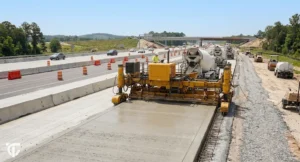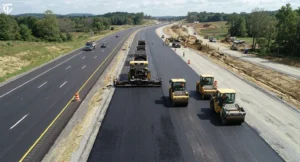

Good design doesn’t build a good road on its own. Road construction quality control is the process of checking whether materials and completed work meet project requirements. A road’s performance also depends on the quality of its materials, construction processes, and inspections. Inadequate compaction, unsuitable materials, inconsistent asphalt placement, or poor workmanship can contribute to premature pavement problems.
This article explains how quality control works at each construction stage, which tests matter most, how modern inspection technology helps, and where quality assurance fits in.
Why Road Construction Quality Cannot Be Overlooked
Road Durability and Long-Term Performance
Material quality, correct layer thickness, and adequate compaction all affect how a pavement performs under traffic. Defects in any of them can contribute to cracking, rutting, settlement, and surface deterioration. Preventing these defects during construction is generally preferable to addressing them once the road is in service.
Road Safety and User Experience
Surface irregularities, pavement deterioration, and drainage problems all affect the people who use a road. That’s why inspectors check smoothness, surface construction, and drainage during the work. Quality control addresses the construction side of these issues, but it can’t prevent road accidents on its own.
Project Costs and Reduced Rework
Checking a layer before placing the next can prevent expensive corrective work later. Inspection at each stage connects directly to how much rework, delay, and later maintenance a project faces.
Quality control doesn’t guarantee that a road will never fail. Its job is to identify and manage defects early.
Understanding Quality Control and Quality Assurance in Road Construction
What Is Quality Control (QC)?
Quality control in road construction covers the checks made while the work is underway. These include inspections, sampling, and testing to confirm that materials and workmanship meet the specified requirements. Typical examples are:
- Checking aggregate gradation (the particle-size distribution)
- Measuring soil moisture and compaction
- Testing asphalt samples
- Checking pavement thickness and surface uniformity
What Is Quality Assurance (QA)?
Road construction quality assurance is a broader system of planned activities that provides confidence that the required quality will be achieved. Depending on the contract, it can include:
- Quality management procedures
- Acceptance testing
- Independent verification
- Audits and documentation
- Review of the contractor’s testing and inspection processes
Who carries out each activity differs by contract and jurisdiction.
How Project Specifications and Quality Plans Define Road Quality Standards
Understanding Project Specifications
Contract documents and the governing road authority’s specifications set the required material properties, construction tolerances, testing procedures, and acceptance criteria. Together, they define the road quality standards for a project.
Depending on the location, these may include FHWA and state DOT specifications in the United States, National Highways and related UK specifications, provincial transportation specifications in Canada, Austroads guidance and state road authority specifications in Australia, and national and European standards in Europe. The governing contract and relevant authority decide which requirements apply.
Developing a Quality Management Plan
A project quality plan should identify:
- Quality objectives
- Inspection and testing responsibilities
- Approved testing procedures
- Sampling and testing frequency
- Acceptance criteria
- Equipment calibration requirements
- Documentation and reporting
- Procedures for handling nonconforming work
Where Quality Control Is Required During Road Construction
Quality checks don’t wait until the road is finished. They happen at every stage, and each completed layer may need inspection and approval before the next one goes down.
Material Selection and Testing
Materials need to be checked before they go into the road. Aggregates, soil, asphalt, and other road construction materials serve different functions in the pavement layers. Hence, each layer needs its own materials and testing procedures. Checks may cover:
- Soil suitability and classification
- Aggregate gradation and particle characteristics
- Moisture content
- Material cleanliness and other specification-dependent properties
- Asphalt binder and mixture properties, where relevant
Subgrade and Earthwork Inspection
The subgrade is the prepared soil foundation beneath the pavement layers, so it needs to be stable before anything is built on it. Inspection usually looks at:
- Soil classification and suitability
- Moisture conditioning
- Compaction and field density verification
- Layer thickness and elevation
- Weak or unsuitable areas
In some applications, a Light Weight Deflectometer (LWD) may be used to evaluate stiffness or deflection response. Its use depends on project specifications, and the results need proper interpretation. An LWD is not a direct density measurement.
Subbase and Base Course Quality Checks
The subbase and base course distribute traffic loads and support the pavement surface. Checks include:
- Aggregate gradation
- Moisture content
- Compaction and density
- Layer thickness
- Surface level and cross-section
- Drainage considerations
Inadequate preparation or inconsistent compaction in these layers can cause problems for the pavement above them.
Asphalt and Surface Course Inspection
Asphalt concrete is a paving mixture of aggregates and a bituminous binder. Asphalt quality control starts with the approved mix design and continues through production, delivery, placement, and compaction. Inspection covers:
- Aggregate gradation and binder content
- Asphalt temperature at relevant stages, according to the project specification
- Uniform placement, avoiding segregation (the separation of coarse and fine particles in the mix)
- Compaction and in-place density
- Layer thickness, joints and surface smoothness
Testing requirements depend on the approved mix design and the project specifications.
Density gets particular attention. FHWA cites studies showing that a 1% increase in in-place asphalt pavement density can extend service life by at least 10%. That finding comes from studies and is not a guaranteed outcome for every pavement.
Concrete Pavement – Where Applicable
Concrete pavement is built differently from asphalt, so asphalt mix testing methods don’t apply. Where a project uses concrete pavement, checks may include fresh-concrete properties, specified strength tests, slab thickness, curing, and joint construction.
Important Tests Used in Road Construction Quality Control
The table below summarizes what each common test checks. Not every project uses every test. Test methods, acceptance limits, and testing frequency depend on the applicable specification.
| Test | What it Checks | Why it Matters |
| Sieve Analysis | Aggregate particle-size distribution. | Checks compliance with gradation requirements. |
| Moisture Content Test | Water content in soil or aggregate. | Helps determine suitable moisture conditions for compaction. |
| Proctor Compaction Test | Relationship between moisture content and dry density under a specified compactive effort. | Establishes laboratory reference values. |
| Field Density Test | In-place density of compacted soil or aggregate. | Checks field compaction against specified requirements. |
| Asphalt Binder Content Test | Binder proportion in an asphalt mixture. | Helps verify mix composition. |
| Asphalt Density Test | Density of compacted asphalt pavement. | Evaluates compaction and helps assess pavement quality. |
| Pavement Thickness Test | Actual constructed layer thickness. | Checks compliance with design and contract requirements. |
Laboratory reference density and field density are related, but they aren’t the same measurement. The Proctor test sets a reference value in the lab. In contrast, the field density test checks the material as compacted on site. For asphalt, cores, approved density gauges, and other accepted methods may be used to assess in-place density.
How Modern Technology Improves Road Construction Quality Control
Conventional inspection still matters. Newer tools add data during construction instead of only after it.
Intelligent Compaction (IC)
Intelligent compaction uses instrumented rollers fitted with sensors and positioning technology. The system records roller passes, temperature, and compaction-related measurements. Operators can use that data to spot inconsistent roller coverage and adjust their compaction practices. IC doesn’t automatically guarantee the required density.
Paver-Mounted Thermal Profiling (PMTP)
PMTP systems monitor asphalt temperature patterns behind the paver. Thermal segregation, meaning temperature differences across the asphalt mat, can point to areas that may be vulnerable to lower density and premature deterioration. Paving crews can use this information to identify potential segregation.
FHWA’s 2024 technical brief reports that Missouri DOT recorded a 10% decrease in severe thermal segregation after implementing PMTP in 2017. That is one state’s reported result, not an expected outcome for every project.
PMTP monitors temperature, not density. Sensor calibration, data quality, and GNSS limitations can also affect how well these systems perform.
Non-Destructive Testing (NDT)
Suitable NDT technologies can provide extra information about pavement properties without relying entirely on destructive sampling, such as coring. Some of them estimate density or other properties, so they need calibration or correlation with established measurements. They add to conventional acceptance testing. They don’t replace it.
Common Quality Control Problems and How to Prevent Them
Quality control also shows its value when something goes wrong. These are common problems and the responses that typically follow:
| Problem | Possible Quality-control Response |
| Incorrect Material Gradation | Verify test results and check the material source or mix. |
| Excessive or Insufficient Moisture | Recondition the material and retest where required. |
| Inadequate Compaction | Review compaction operations and verify density. |
| Asphalt Temperature Variation | Review production, delivery, and paving conditions. |
| Incorrect Layer Thickness | Survey or measure the affected area. |
| Incomplete Testing Records | Restore traceability and document outstanding inspections. |
What Happens When a Test Fails?
A failed test starts a corrective-action sequence:
- Identify and document the nonconforming material or work.
- Confirm the test result and check for sampling or equipment issues.
- Notify the responsible engineer or project authority, according to the contract.
- Determine the cause and agree on an approved corrective action.
- Carry out the correction.
- Retest or reinspect as required.
- Record the outcome and obtain the required approval before proceeding.
A failed test doesn’t automatically mean removing and replacing the entire road layer. The right response depends on the nature of the defect, its location, the engineering assessment, and the contract’s acceptance criteria.
The Role of Documentation and Final Quality Inspection
Quality control only works if the records are reliable. Throughout construction, projects typically keep:
- Material test reports
- Field density and compaction records
- Asphalt production and delivery records
- Inspection checklists
- Equipment calibration records
- Nonconformance and corrective-action reports
- Final inspection and acceptance documentation
These records establish traceability, verify compliance, and support future maintenance or investigation. Final acceptance follows the contract’s specified acceptance procedures. A contractor’s internal QC report alone doesn’t prove it.
Final Thoughts
Building Better Roads Through Consistent Quality Control
Road Construction Quality Control depends on a coordinated process. It starts with suitable materials and correct construction practices. Appropriate testing, inspections, and documented corrective actions complete it. Quality has to be managed throughout construction, not checked only after the pavement is complete.
Frequently Asked Questions
What Is Quality Control in Road Construction?
It’s the set of inspections, sampling, and tests that check materials, workmanship, and construction activities against project requirements.
What Is the Difference Between Quality Control and Quality Assurance in Road Construction?
Quality control covers the operational checks made during the work. Quality assurance is the broader system that gives confidence that the required quality will be achieved.
What Tests Are Performed During Road Construction?
Common tests cover soil, aggregate, compaction, asphalt, and pavement thickness. Which ones apply depends on the pavement type and project specifications.
How Is Asphalt Quality Checked During Road Construction?
Inspectors check the approved mix design, aggregate gradation, binder content, temperature, segregation, compaction, and in-place density.
How Does Quality Control Improve Road Durability?
Suitable materials, proper compaction, and consistent construction, verified by testing, support long-term pavement performance. They don’t remove every risk of pavement distress.
References:
- Federal Highway Administration (FHWA). In-place Pavement Density. Updated October 29, 2024.
- Federal Highway Administration (FHWA). NDT and ICT for Asphalt Pavement Construction – Tech Brief. 2024.