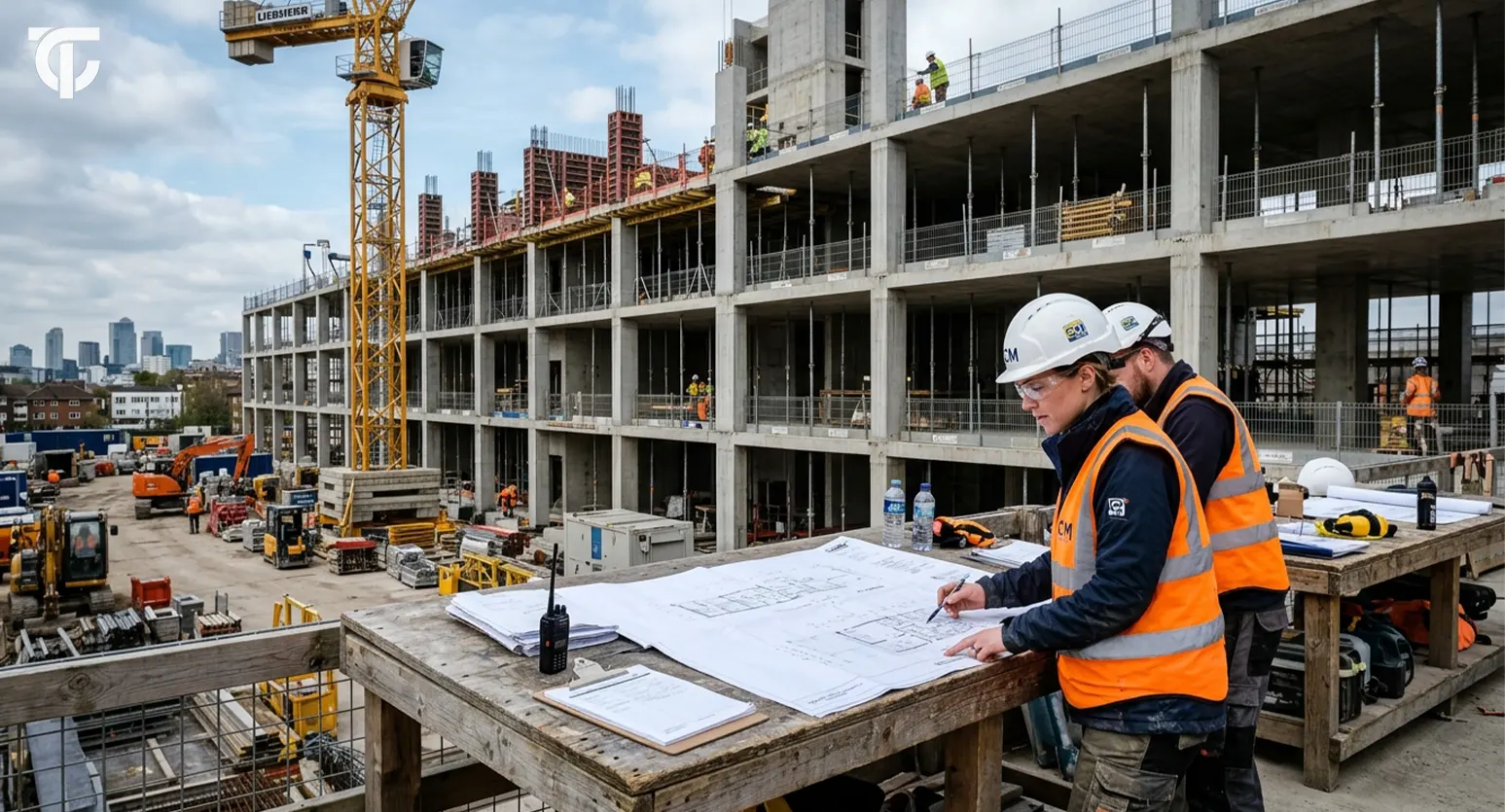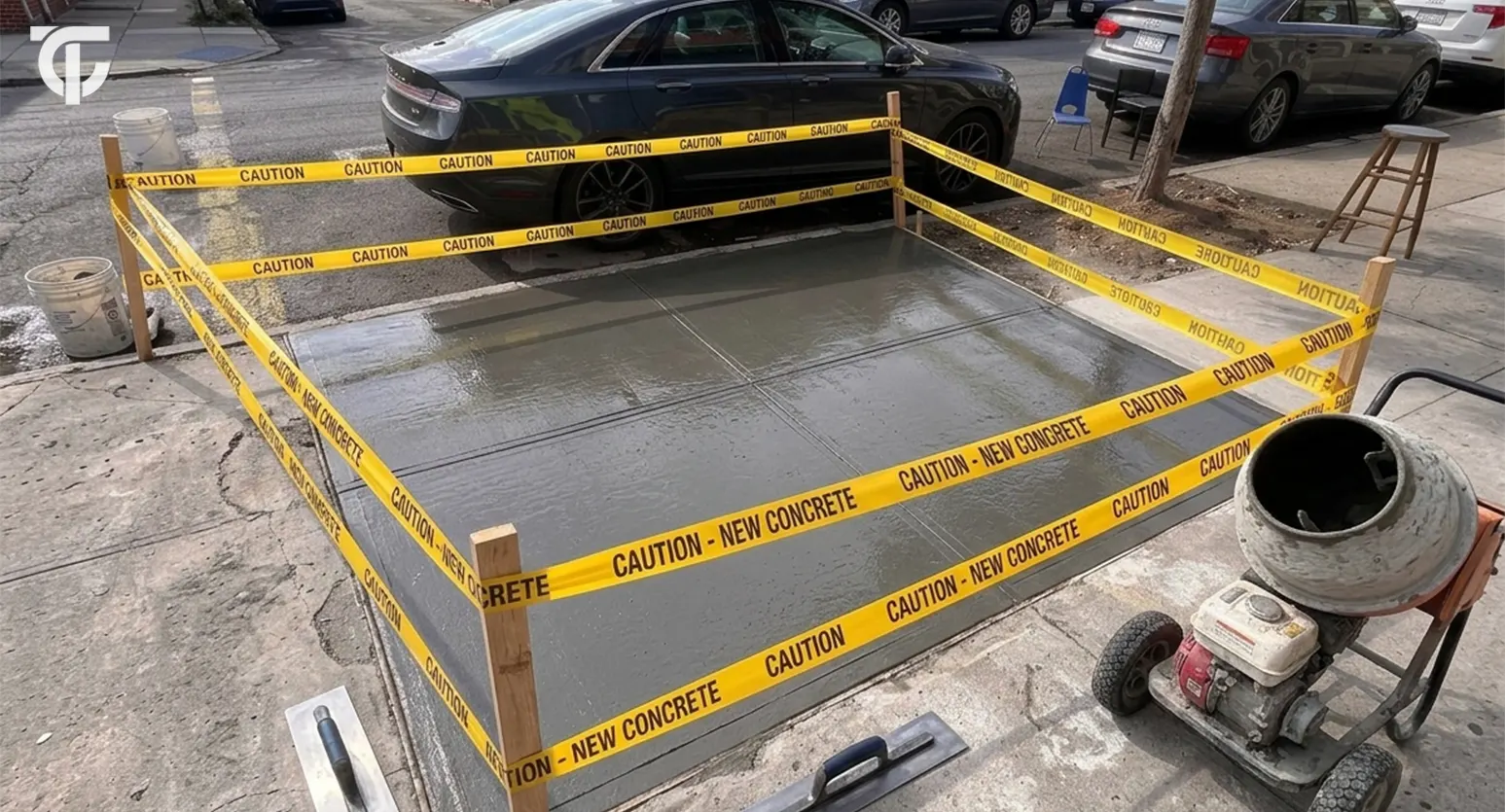

Concrete remains the foundation of modern construction, but engineers’ approaches to designing, producing, placing, and monitoring it are changing. Advanced admixtures, ultra-high-performance concrete, lower-carbon binders, three-dimensional printing, and embedded sensors are expanding what concrete structures can achieve. Some technologies improve strength and durability, while others target construction speed, material consumption, or long-term maintenance costs.
Each innovation solves a different problem. A high-strength mixture may help rehabilitate a bridge without adding excessive weight. In contrast, a printable mixture must retain its shape as successive layers are deposited. Lower-carbon concrete presents another challenge: reducing cement-related emissions without compromising strength development, curing, or service life.
Understanding how these technologies work, where they apply, and what limits their performance helps construction professionals choose solutions that meet project requirements.
High-Performance Concrete and Advanced Admixtures
High-performance concrete (HPC) is designed to meet demanding requirements for strength, durability, workability, or resistance to environmental exposure. Ultra-high-performance concrete (UHPC) takes this approach further through a densely packed particle structure, a low water-to-binder ratio, carefully selected cementitious materials, high-range water reducers, and often steel fibers.
The dense microstructure can limit the movement of water and aggressive substances through the hardened material. Fiber reinforcement can improve tensile behavior and help control crack development. These properties make UHPC useful for selected bridge components, connections between precast elements, structural repairs, and thin overlays on deteriorated concrete decks.
👉🏻 Did you know?
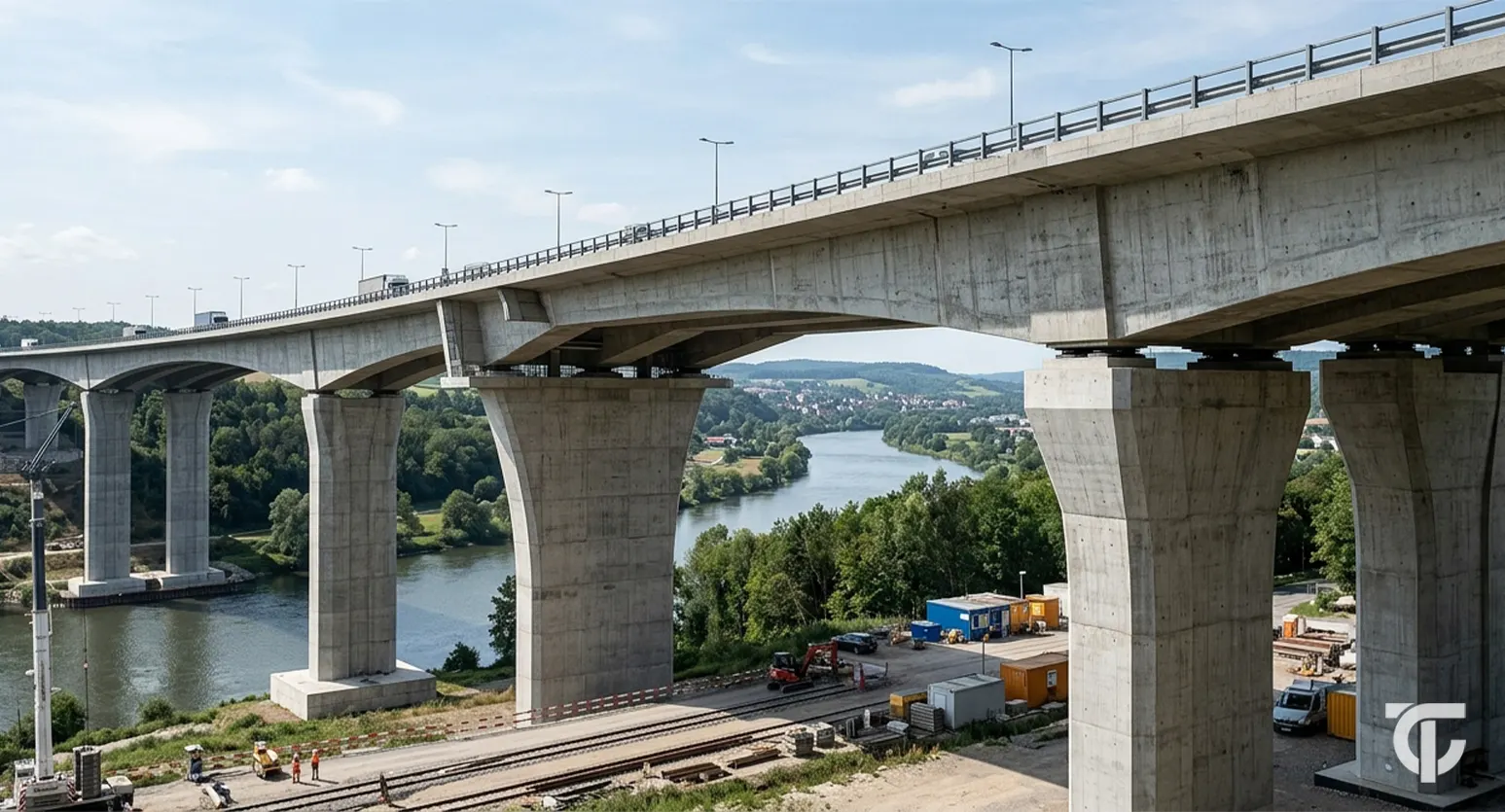
The Federal Highway Administration has documented UHPC applications in bridge preservation and repair, including deck overlays and connections between prefabricated components. In suitable applications, a thin UHPC overlay can protect the existing deck while improving its structural performance, potentially avoiding a more extensive replacement.
However, high compressive strength alone does not establish suitability. UHPC often costs more than conventional concrete and requires careful control of mixing, fiber distribution, surface preparation, placement, and curing. For repairs, the bond between new and existing concrete is especially important. A poorly prepared substrate can undermine an otherwise well-designed material.
Advanced chemical admixtures provide another way to improve concrete performance. Polycarboxylate ether-based superplasticizers disperse cement particles, letting producers achieve the required workability with less mixing water. Viscosity-modifying admixtures can help stabilize mixtures, while accelerators and retarders adjust setting behavior to suit project conditions.
Where these technologies add value:
- Bridge rehabilitation and infrastructure exposed to moisture, chlorides, or freeze-thaw cycles.
- Congested reinforcement and complex formwork that require improved flow.
- Precast construction, where consistent production and controlled strength development are important.
- Structural repairs where reducing downtime and future maintenance can justify higher initial material costs.
The appropriate solution depends on exposure conditions, structural design, construction methods, and the required service life. Trial mixes remain essential because cement chemistry, aggregate characteristics, temperature, and admixture compatibility can change the behavior of the finished concrete.
Low-Carbon Concrete and Alternative Binders
Concrete’s environmental impact is closely connected to cement production. Manufacturing Portland cement requires heating raw materials to high temperatures and converting limestone into clinker. This process releases carbon dioxide through both chemical reactions and fuel consumption.
One approach to reducing these emissions is to use less clinker in the binder. Depending on local availability and applicable specifications, concrete producers can incorporate supplementary cementitious materials (SCMs), including ground granulated blast-furnace slag, fly ash, and calcined clay. Portland-limestone cement and other blended binders can also reduce the quantity of conventional clinker required.
These materials influence more than the carbon footprint. Their chemical composition, fineness, and reactivity affect water demand, setting behavior, heat generation, and strength development. Some blended mixtures gain early strength more slowly than conventional Portland cement mixtures. However, their later-age performance may be satisfactory or advantageous under suitable conditions.
Calcined clay combined with limestone is one promising route. Processing suitable clay at elevated temperatures activates reactive aluminosilicate phases that can contribute to cementitious reactions. When combined with limestone and other binder constituents in a properly designed formulation, calcined clay can reduce clinker demand while maintaining useful engineering performance.
Researchers are also investigating recycled concrete fines and other processed mineral residues as potential components of lower-carbon cementitious systems. Their suitability depends on composition, contamination, processing requirements, and supply consistency. Material that performs well in one formulation may behave differently when the source or processing method changes.
Carbon mineralization offers another approach. Certain production and curing processes introduce carbon dioxide into concrete or convert it into stable mineral forms. Evaluate the quantity of carbon permanently retained against the system’s energy, transport, and processing requirements.
What engineers need to verify before specifying a lower-carbon mixture:
- Strength development: Check whether the mixture meets stripping, loading, and opening-to-service requirements.
- Curing conditions: Establish appropriate temperature and moisture controls, particularly where early hydration may be slower.
- Durability: Assess permeability, shrinkage, resistance to relevant chemical exposure, and other properties required for the application.
- Environmental performance: Compare emissions using a consistent assessment boundary and a defined functional unit, such as a cubic meter of concrete delivering a specified performance over a given service life.
Lower clinker content does not automatically guarantee lower overall environmental impact if additional processing, transport, or maintenance offsets some of the benefits. Evaluate the mixture as a complete construction material rather than by a single ingredient or emissions figure.
Three-Dimensional Concrete Printing
Three-dimensional concrete printing changes how concrete is formed. A computer-controlled nozzle deposits a cement-based mixture in successive layers according to a digital design. This approach can reduce the need for conventional formwork, support complex geometries, and automate repetitive placement tasks.
Its main engineering challenge is balancing flow with shape retention. The material must pass through pumps and hoses, move through the nozzle, and form continuous layers without blocking the equipment. Once deposited, it must retain sufficient stiffness to support subsequent layers.
Three properties are particularly important:
- Extrudability: The mixture must pass through the delivery system and nozzle without excessive pressure, blockage, or segregation.
- Buildability: Deposited layers must support their own weight and the load imposed by later layers without excessive deformation.
- Open time and interlayer bonding: The material must remain workable long enough for the printing sequence, while successive layers must bond adequately to avoid weak interfaces.
These requirements create competing demands. A mixture that is too fluid may slump, while one that stiffens too quickly can interrupt production. A long delay between printed layers may also affect their bond.
Structural design presents additional challenges. Many printing systems need separate strategies for reinforcement, connections, openings, and load transfer. Engineers must also consider fire resistance, weather exposure, dimensional tolerances, inspection access, and compliance with local building codes.
Three-dimensional printing is therefore most useful where the project can benefit from automation, reduced formwork, repetitive production, or geometries that are expensive to create through conventional methods. It should not be assumed to reduce total project cost in every case. Equipment mobilization, specialized material development, reinforcement, finishing, and inspection can change the economic calculation.
Self-Healing Concrete and Crack Management
Cracking is a common concern in concrete structures. Restrained shrinkage, thermal effects, applied loads, and environmental exposure can create cracks that allow water and aggressive substances to penetrate the material. Where reinforcement is present, this penetration can contribute to corrosion and deterioration.
- Self-healing concrete aims to close certain cracks or reduce their permeability without requiring conventional repair work for every small defect. The term covers several mechanisms, and their performance varies considerably.
- Autogenous healing uses processes that can occur naturally in cement-based materials. Continued hydration of unreacted cement and calcium carbonate precipitation may seal small cracks under suitable conditions, particularly when moisture is available.
- Capsule-based systems incorporate containers that release a healing agent when the surrounding material cracks. The agent may fill the crack or react to form a sealing product. Their effectiveness depends on capsule distribution, survival during mixing, release behavior, and the agent’s ability to reach the damaged region.
- Bacteria-based systems use selected microorganisms or biologically associated processes to promote mineral precipitation, often involving calcium carbonate. The challenge is maintaining healing conditions in a highly alkaline cementitious environment and ensuring the mechanism works under real exposure conditions.
- Crystalline additives provide another approach by promoting reactions that can help obstruct pathways through which water moves. These systems may be relevant where limiting water penetration is a major durability objective.
Self-healing concrete should not be confused with a material that can automatically restore any damaged structural member. Crack width, moisture, temperature, chemical exposure, and crack location all influence the outcome. A visible surface seal does not necessarily mean a crack has healed through its full depth, regained its original strength, or eliminated an underlying structural problem.
The technology is most promising where repeated small cracks create recurring maintenance demands. Before specifying it, engineers should establish measurable performance requirements, such as crack closure, reduced permeability, or improved durability, and verify them with appropriate testing. Structural damage still requires appropriate inspection and engineering assessment.
Smart Sensors and Data-Driven Concrete Quality Control
Concrete quality depends heavily on what happens after mixing. Temperature, moisture, placement conditions, and curing affect strength development and durability. Traditional testing remains essential, but sensors can provide information about conditions inside a pour rather than relying exclusively on samples tested elsewhere.
Monitoring Temperature and Strength Development
Temperature sensors embedded in concrete are particularly valuable in mass pours. Hydration generates heat, and differences between the core and outer surfaces can produce thermal stresses. If those stresses exceed the concrete’s developing tensile capacity, cracking may occur. Monitoring temperature helps engineers assess whether cooling measures, insulation, or changes to the construction sequence are needed.
Concrete maturity methods provide another practical application. The maturity index relates a concrete mixture’s temperature history to its strength development. After calibrating the relationship for the specific mixture, engineers can estimate in-place strength and make better-informed decisions about formwork removal, post-tensioning, or opening a pavement to traffic. For a closer look at these considerations, see our guide to how concrete is used in U.S. road construction.
The method is not a universal substitute for specified strength testing. Its reliability depends on appropriate calibration, accurate temperature measurements, and an underlying relationship suited to the mixture and conditions in question.
Long-Term Structural Monitoring and Digital Records
Longer-term structural monitoring can use strain gauges, displacement sensors, and fiber-optic systems to track changes in bridges, tunnels, and other critical infrastructure. When measurements are combined with inspection records and engineering models, they can help identify unusual behavior and prioritize further investigation.
Digital systems can also connect batch records, material proportions, weather readings, placement times, curing data, and test results. This provides a fuller account of construction quality and helps teams investigate recurring defects.
Limitations of Sensor-Based Monitoring
Sensors cannot explain every abnormal reading on their own. Equipment may drift, connections may fail, and environmental changes may influence measurements. Effective monitoring therefore requires calibration, reliable data collection, clear alert thresholds, and trained personnel who can distinguish a genuine warning from a faulty signal.
What the Construction Chemicals Sector Reveals
The growing role of admixtures and other specialty materials provides useful context for understanding these technical developments.
Markntel Advisor’s Construction Chemicals Market report estimates that the sector will grow from USD 74.37 billion in 2026 to USD 91.34 billion by 2032, at a projected compound annual growth rate of 3.48%. Concrete admixtures are the report’s leading product category.
The category covers several applications, including workability modification, waterproofing, repair, and durability enhancement. The forecast describes the wider construction chemicals sector, not sales of any single innovation or a direct measure of how quickly advanced concrete technologies are being adopted.
For project teams, the key decision is whether a material or system solves a defined engineering problem. A new admixture may improve placement, but its compatibility with the cement and aggregates must be established. A lower-carbon binder may reduce clinker use, but strength development and curing must still satisfy the construction schedule. Embedded sensors may provide earlier warnings, but only if the measurements support clear engineering decisions.
Comparing Major Concrete Innovations
| Technology | Main Benefit | Suitable Applications | Key Consideration |
| High-performance and UHPC mixtures | Strength, low permeability, and improved durability | Bridge repairs, connections, demanding structural applications | Material cost, placement, curing, and bond quality |
| Lower-carbon binders | Reduced clinker demand and potentially lower embodied emissions | Buildings, infrastructure, precast concrete | Strength development, material availability, and durability testing |
| Advanced admixtures | Controlled workability, setting, and water demand | Pumped concrete, complex reinforcement, precast work | Dosage, compatibility, and temperature sensitivity |
| Three-dimensional printing | Automated placement and reduced formwork | Selected walls, components, and complex geometries | Buildability, interlayer bonding, reinforcement, and code compliance |
| Self-healing systems | Potentially reduced crack permeability and maintenance | Applications with recurring small cracks and demanding durability requirements | Healing conditions, performance verification, and cost |
| Embedded sensors and maturity methods | Better visibility into curing and structural behavior | Mass pours, pavements, bridges, and critical infrastructure | Calibration, data reliability, and interpretation |
How to Select the Right Concrete Technology
Start innovation with the performance problem, not a preference for the newest available material. A practical assessment can follow four steps.
- Define the requirement. Establish the necessary strength, durability, workability, carbon target, construction speed, or maintenance objective.
- Test material compatibility. Use trial mixes and representative construction conditions to evaluate how cementitious materials, aggregates, admixtures, equipment, and curing procedures interact.
- Compare total project cost. Include material and installation expenses, equipment, inspection, construction time, expected maintenance, and the consequences of service disruption.
- Set verification criteria. Specify the relevant tests, acceptance limits, monitoring procedures, and documentation needed to demonstrate that the technology performs as intended.
This process matters especially when multiple innovations are combined. For example, a printable mixture with a lower-carbon binder must meet both the fresh-state requirements of printing and the hardened-state performance required for its intended use.
Frequently Asked Questions
What is the most important innovation in concrete technology?
There is no single innovation that is best for every project. UHPC can be valuable for demanding structural repairs, lower-carbon binders can reduce clinker consumption, and embedded sensors can improve curing decisions. The appropriate choice depends on project requirements and the evidence supporting each technology.
Can sustainable concrete match the performance of conventional concrete?
Some lower-carbon mixtures can meet conventional concrete’s strength and durability requirements. Still, performance depends on the binder composition, aggregates, admixtures, curing, and exposure conditions. Each mix must be tested against the relevant specifications rather than assumed equivalent.
Does self-healing concrete eliminate the need for repairs?
No. Self-healing systems may close selected small cracks or reduce permeability under suitable conditions. They do not guarantee full structural recovery, and significant cracking or damage still requires inspection and appropriate intervention.
How do sensors help improve concrete construction?
Sensors can track temperature, maturity, strain, and other properties during curing or service. When the measurements are properly calibrated and interpreted, they help engineers assess strength development, identify unusual behavior, and make better-informed quality-control and maintenance decisions.
Building Better Concrete Structures
Concrete technology is advancing through improvements in material chemistry, mixture design, automated placement, and digital monitoring. These developments give engineers more options to improve structural performance, reduce material impacts, and manage maintenance over a structure’s life.
The strongest results come when innovation is matched to a clearly defined construction need. Proper mix design, representative testing, skilled placement, appropriate curing, and reliable quality control remain fundamental. New technologies can expand the options available to construction teams. Still, their value ultimately depends on proven performance under real project conditions.
Guest Contributor:
This article was contributed to The Concrete Talk by Shammi Thakur, Research Director at Markntel Advisor, with more than 15 years of experience in market research, strategic intelligence, industry analysis, forecasting, and competitive insights.