
Not every renovation pays you back. Spend $30,000 on a backyard pool, and you might barely break even at resale. Spend a fraction of that on a new garage door, and you could recover nearly double your money. 😕
That gap is exactly why picking the right home improvements that increase property value matters so much before you swing a hammer. Americans clearly believe remodeling is worth it.
💡 Did You Know?
In 2024, homeowners spent an estimated $603 billion on remodeling projects nationwide, according to the Harvard Joint Center for Housing Studies, as cited in the NAR 2025 Remodeling Impact Report. That’s a lot of money chasing very different goals, some smart, some not.
This guide breaks down 15 upgrades ranked by real resale value, buyer demand, and current market trends. You’ll find the highest-value improvements, the projects with the strongest cost recovery, budget-friendly upgrades that still move the needle, and the features buyers keep asking for. Let’s get into it!
Why Some Home Improvements Increase Property Value More Than Others
Buyers don’t judge every upgrade equally. A finished kitchen speaks to them right away. A finished basement, less so, unless they specifically need the extra space. First impressions do a lot of the heavy lifting here. Most buyers form an opinion about a home within the first few minutes, often before they’ve even reached the front door.
That’s why curb appeal and a well-kept entry carry so much weight in resale value, even when they look like small details on paper. Move-in ready homes also have stronger buyer appeal right now.
📈 According to the NAR 2025 Remodeling Impact Report, 46% of buyers are less willing to compromise on a home’s condition than they were in previous years.
Fewer people want a fixer-upper, even at a discount. Many would rather pay more upfront for a home that’s already updated. Neighborhood value plays a role too. An upgrade that makes sense in one area might not make sense in another.
A $60,000 kitchen remodel in a starter-home neighborhood can price a house above what local buyers expect to pay. At the same time, the same project in a higher-end area might be the norm.
Housing market trends shift buyer expectations year to year. Energy efficiency has climbed in priority as utility costs have risen. At the same time, some once-popular features have fallen out of favor. Cost recovery depends on all of these factors working together, not on any single upgrade by itself.
15 Home Improvements That Add Value (Ranked by ROI)
Here’s the part most homeowners get wrong: bigger doesn’t always mean better. A dramatic interior renovation can look great in photos, but it won’t always outperform a smaller, well-chosen project at resale. Exterior projects tend to win this comparison more often than people expect.
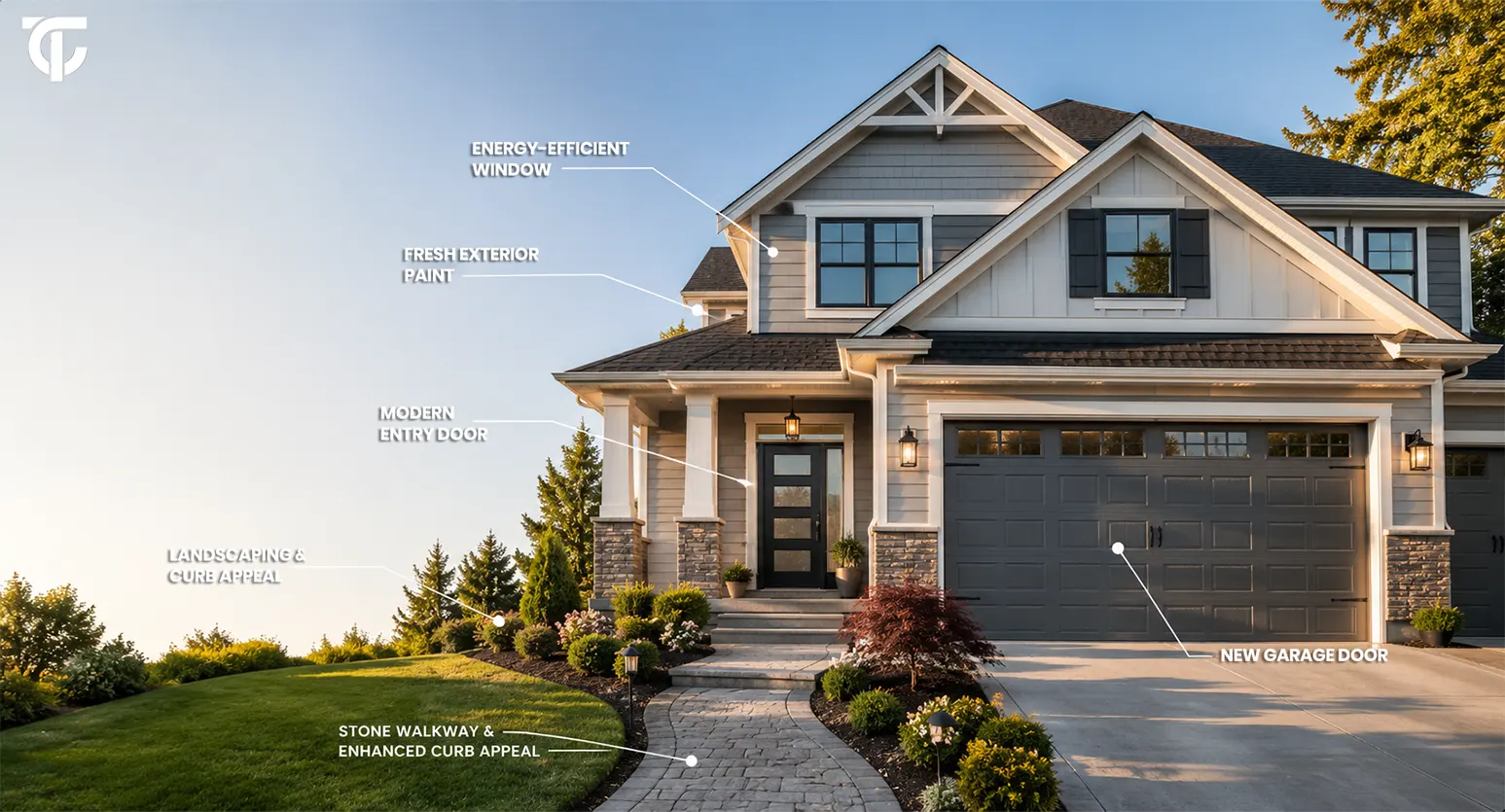
👉 The 2025 Cost vs. Value Report found that 8 of the top 10 highest-ROI remodeling projects were exterior improvements: garage doors, entry doors, and siding, not kitchens or bathrooms.
Curb appeal isn’t a nice-to-have. It’s often the difference between a buyer pulling into the driveway excited, or already negotiating a lower price before they’ve walked inside.
- Garage Door Replacement
- Entry Door Replacement
- Minor Kitchen Remodel
- Bathroom Remodel
- Fresh Interior Paint
- Landscaping & Curb Appeal
- Exterior Paint / Siding
- Energy-Efficient Windows
- Attic Insulation
- Roof Replacement
- Flooring Upgrade
- Deck / Patio
- Basement Finishing
- Smart Home Features
- Energy-Efficient Kitchen Appliances
📌 One Quick Note Before the List Explanation: The ROI figures below come from the 2025 Cost vs. Value Report, the most recent data available. It’s the benchmark most industry professionals are using for 2026 renovation planning.
1. Garage Door Replacement
A garage door is one of the biggest visual elements on the front of most homes, and it’s often the first thing a buyer notices before they even reach the porch.
Key Takeaways
| Factors | Details |
| What It Is | Swapping out an old, dented, or faded garage door for a new one, whether that’s a straightforward steel replacement or a carriage-house style design. |
| Why Buyers Like It | It’s an instant visual upgrade. A worn garage door can make an entire home look neglected, even if everything else has been renovated. |
| Supporting Data | According to the 2025 Cost vs. Value Report, replacing a garage door recovers around 194% of its cost at resale. Few projects come close to that kind of return. |
| When To Consider It | If your garage door is more than 10–15 years old, visibly faded, dented, or doesn’t match the rest of your home’s exterior. |
| Who Benefits Most | Homeowners preparing to list soon, especially in neighborhoods where garages make up a large share of the street-facing view. |
| Practical Example | Replacing a plain, flat door with a modern carriage-style design (with or without windows) can change an entire front elevation for a relatively small investment. |
| Verdict | Excellent ROI |
2. Entry Door Replacement
The front door frames the entrance to your home. It sets a tone before a buyer even steps inside.
Key Takeaways
| Factors | Details |
| What It Is | Replacing an old, scratched, or drafty front door with a new insulated steel entry door. |
| Why Buyers Like It | It signals security and a well-maintained home right at first contact. Buyers notice a tired front door quickly, even if they can’t say exactly why it bothers them. |
| Supporting Data | The 2025 Cost vs. Value Report puts steel entry door replacement at roughly 188% ROI, one of the highest returns of any project tracked. |
| When To Consider It | If your current door looks worn, lets in drafts, or hasn’t been updated in a decade or more, especially before listing. |
| Who Benefits Most | Sellers who want a fast, low-cost upgrade with high visual payoff, and homeowners dealing with energy loss around an old door frame. |
| Practical Example | Swapping a builder-grade door for an insulated steel door with a modern finish and updated hardware. |
| Verdict | Excellent ROI |
3. Minor Kitchen Remodel
The kitchen is usually the room buyers spend the most time studying, even on a quick showing.
Key Takeaways
| Factors | Details |
| What It Is | A minor kitchen remodel typically means refacing or painting cabinets, updating countertops, swapping in new appliances, and refreshing fixtures, not a full gut renovation. |
| Why Buyers Like It | It feels fresh and functional without looking over-customized, which supports that broad, move-in ready appeal buyers are after. |
| Supporting Data | The 2025 Cost vs. Value Report shows minor kitchen remodels returning about 96% ROI, a much stronger recovery rate than most full kitchen overhauls, which cost far more without matching returns. |
| When To Consider It | When the kitchen layout still works, but the finishes look dated, think 10–20-year-old cabinets or laminate counters. |
| Who Benefits Most | Homeowners with a functional kitchen who mainly need a style refresh, not a redesign. |
| Practical Example | Repaint cabinets, update hardware, and install new countertops instead of tearing out the whole space. |
| Verdict | Good Investment |
4. Bathroom Remodel
Bathrooms rank high on most buyers’ priority lists, but a full remodel doesn’t always pay for itself the way people expect.
Key Takeaways
| Factors | Details |
| What It Is | Updating fixtures, the vanity, lighting, flooring, and finishes, usually without changing the floor plan. |
| Why Buyers Like It | A clean, updated bathroom signals a well-maintained home. Buyers pick up on grime, cracked tile, and dated fixtures almost immediately. |
| Supporting Data | According to the 2025 Cost vs. Value Report, bathroom remodels return about 74% ROI. That’s solid, but lower than the exterior projects above, which is why the budget matters here. |
| When To Consider It | When original fixtures are decades old, or the tile and lighting clearly haven’t been touched since the home was built. |
| Who Benefits Most | Homeowners planning to stay a few more years and enjoy the upgrade themselves, not just sellers chasing a quick resale bump. |
| Practical Example | Replacing an old vanity, updating lighting, and re-grouting or replacing tile instead of reworking the layout. |
| Verdict | Good Investment |
🤔 Notice a pattern here? The best home improvement for your situation isn’t automatically the biggest one. It’s the one that matches what buyers in your specific market actually expect to see. A $150,000 primary suite addition might turn heads, but it won’t outperform a well-chosen door or a smart kitchen refresh if your neighborhood doesn’t support that price point.
5. Fresh Interior Paint
Few upgrades offer this kind of return for this little effort.
Key Takeaways
| Factors | Details |
| What It Is | Repainting walls, trim, and ceilings throughout the home, typically in neutral, buyer-friendly tones. |
| Why Buyers Like It | Fresh paint reads as “move-in ready.” Scuffed walls or bold, personal color choices make buyers picture work they’ll have to do themselves, and that mental math quietly lowers offers. |
| Supporting Data | Paint is one of the most cost-effective cosmetic updates available. It won’t show up with a flashy ROI percentage the way a garage door does, but it directly supports first impressions and helps buyers picture their own furniture in the space instead of yours. |
| When To Consider It | Before listing, always. Also worth doing if wall colors are highly personalized (dark accent walls, kids’ room murals) or scuffed from years of daily use. |
| Who Benefits Most | Sellers on a tight timeline. This is one of the fastest ways to change how a home feels without touching the layout. |
| Practical Example | Repainting a dated living room from a heavy terracotta or navy into a soft greige or warm white can make the same square footage feel noticeably bigger and brighter. |
| Verdict | Excellent ROI |
6. Landscaping & Curb Appeal
This is where buyer appeal starts, sometimes before a showing even begins.
Key Takeaways
| Factors | Details |
| What It Is | Trimming overgrown shrubs, mowing and edging the lawn, adding mulch, planting a few low-maintenance shrubs or flowers, and clearing clutter from the yard. |
| Why Buyers Like It | It signals that the whole property has been cared for, not just the parts visible from inside. An overgrown yard raises questions buyers didn’t even know to ask, like whether other maintenance has been skipped too. |
| Supporting Data | Curb appeal shapes a buyer’s first impression before they’ve opened the front door. Since 8 of the top 10 highest-ROI projects in the 2025 Cost vs. Value Report are exterior-focused, landscaping fits squarely into a pattern that consistently pays off. |
| When To Consider It | Anytime the yard looks neglected, or a few weeks before listing photos are taken. |
| Who Benefits Most | Almost every seller. It’s one of the lowest-cost updates on this list with some of the broadest buyer appeal. |
| Practical Example | Trimming an overgrown hedge blocking the front windows and adding fresh mulch to garden beds can transform listing photos without major spending. |
| Verdict | Excellent ROI |
7. Exterior Paint / Siding
The exterior is your home’s handshake. It’s the first thing every buyer evaluates.
Key Takeaways
| Factors | Details |
| What It Is | Repainting exterior surfaces or replacing worn, faded, or damaged siding. |
| Why Buyers Like It | A clean, well-maintained exterior suggests the rest of the home has been cared for too. Faded or peeling siding does the opposite, even if the interior is in great shape. |
| Supporting Data | Exterior improvements dominate the highest-ROI category in the 2025 Cost vs. Value Report. Siding replacement and exterior painting both fall into that same curb-appeal-driven return pattern as garage doors and entry doors. |
| When To Consider It | If siding is cracked, warped, or faded, or if the exterior paint hasn’t been refreshed in 8–10 years. |
| Who Benefits Most | Sellers in neighborhoods where homes are close together, and exteriors get compared house to house. |
| Practical Example | Replacing cracked vinyl siding on the street-facing side of a home, or repainting faded wood siding in a neutral, contemporary color. |
| Verdict | Good Investment |
8. Energy-Efficient Windows
Old, drafty windows cost money every single month, and buyers are catching on to that math faster than they used to.
Key Takeaways
| Factors | Details |
| What It Is | Replacing single-pane or aging double-pane windows with modern, energy-efficient units that better regulate indoor temperature. |
| Why Buyers Like It | Lower utility bills are an easy sell. Buyers walking through a home with new windows often ask directly about energy savings, especially in areas with harsh winters or hot summers. |
| Supporting Data | New windows won’t post the eye-popping ROI percentage of a garage door, but they support long-term value differently, by lowering ongoing costs that buyers factor into their decision. A home that’s cheaper to heat and cool is simply easier to sell. |
| When To Consider It | If your windows are original to a home built more than 20 years ago, or if you notice drafts, condensation between panes, or difficulty opening and closing them. |
| Who Benefits Most | Homeowners in regions with extreme seasonal temperatures, where energy costs weigh heavily on a buyer’s monthly budget. |
| Practical Example | Swapping out foggy, single-pane windows in an older home for double-pane, low-E units can noticeably improve comfort and cut heating costs before a sale. |
| Verdict | Good Investment |
9. Attic Insulation
This one doesn’t photograph well, but buyers notice it in other ways.
Key Takeaways
| Factors | Details |
| What It Is | Adding or upgrading insulation in the attic to improve temperature regulation and reduce energy loss. |
| Why Buyers Like It | Energy-conscious buyers increasingly ask about insulation and utility costs during showings. Lower utility bills are a real selling point, not just a nice-to-have. |
| Supporting Data | Attic insulation is one of the more overlooked return-on-investment projects. It’s inexpensive relative to most renovations, and it directly supports energy savings, which matters more to buyers now than it did five years ago. |
| When To Consider It | If your attic insulation hasn’t been upgraded in 15+ years, or if you’ve noticed inconsistent temperatures between floors. |
| Who Benefits Most | Homeowners in regions with strong seasonal temperature swings, where energy costs are a real concern for buyers. |
| Practical Example | Topping up attic insulation to current recommended levels before listing, and mentioning it in the listing description as a selling point. |
| Verdict | Good Investment |
Between the garage door, the entry door, and now the exterior finishes, you might notice something: the best home improvement for resale rarely lives inside the house at all. Buyers decide how they feel about a property before they’ve touched the front door handle, and the exterior does most of that work.
10. Roof Replacement
A roof isn’t glamorous, but it’s one of the first things a home inspector checks, and one of the first things a nervous buyer asks about.
Key Takeaways
| Factors | Details |
| What It Is | Replacing an aging or damaged roof with new shingles, underlayment, and flashing. |
| Why Buyers Like It | A recently replaced roof removes a huge question mark from the buying decision. Nobody wants to move in and face a $15,000 roof repair within the first year. |
| Supporting Data | Roofing isn’t usually a high-percentage ROI project the way a garage door is, but skipping it can actively hurt your sale. Buyers and their inspectors treat roof condition as a dealbreaker item, and a failing roof often triggers price negotiations far larger than the repair itself would cost. |
| When To Consider It | If your roof is nearing or past its expected lifespan, has visible curling or missing shingles, or has already had leaks or water damage. |
| Who Benefits Most | Sellers whose roof is a known issue. Fixing it before listing avoids scaring off buyers or losing leverage during negotiations. |
| Practical Example | Replacing a 25-year-old asphalt shingle roof before listing, rather than offering a credit and letting the buyer negotiate the price down further. |
| Verdict | Only if Needed |
11. Flooring Upgrade
Flooring sets the tone for an entire room, and worn flooring drags down spaces that are otherwise in good shape.
Key Takeaways
| Factors | Details |
| What It Is | Replacing dated carpet, damaged hardwood, or worn vinyl with updated flooring, commonly engineered hardwood, laminate, or luxury vinyl plank. |
| Why Buyers Like It | Consistent, updated flooring throughout a home feels move-in ready. Stained carpet or scratched hardwood, on the other hand, is one of the fastest ways to make a space feel tired. |
| Supporting Data | Flooring doesn’t top the ROI charts, but it directly shapes buyer perception room by room. A home with fresh flooring photographs better, shows better, and avoids the “this needs work” impression that chips away at offers. |
| When To Consider It | If carpet is stained or worn, hardwood is heavily scratched, or flooring styles clash from room to room. |
| Who Benefits Most | Sellers whose flooring is the most dated element in an otherwise updated home. |
| Practical Example | Replacing worn carpet in a main living area with luxury vinyl plank can unify the look of a home for a manageable renovation budget. |
| Verdict | Good Investment |
12. Deck / Patio
Outdoor space has become a bigger priority for buyers than it used to be, especially since more people are spending time at home.
Key Takeaways
| Factors | Details |
| What It Is | Building a new deck or patio, or restoring an existing one that’s worn, warped, or structurally questionable. |
| Why Buyers Like It | A usable outdoor space extends the home’s livable square footage in a buyer’s mind, even if it’s technically outside. |
| Supporting Data | Outdoor living spaces support broad buyer appeal, particularly in warmer climates or neighborhoods where outdoor entertaining is common. That said, cost recovery varies quite a bit depending on materials and local market trends, so it’s worth being realistic about the return here. |
| When To Consider It | If an existing deck shows signs of rot, loose boards, or rusted hardware, or if the backyard currently lacks any usable outdoor space. |
| Who Benefits Most | Homeowners in regions where outdoor living is a strong local expectation, and sellers whose backyard currently feels unfinished. |
| Practical Example | Restoring a weathered deck with new boards and a fresh stain, rather than building a brand-new structure, often delivers a similar visual improvement for less money. |
| Verdict | Good Investment |
At this point, you’ve covered most of the best home upgrades to increase value that buyers actively notice, from the driveway to the backyard. Some of these projects chase a high ROI directly, while others protect you from the red flags that scare buyers off entirely. Both matter when you’re deciding where your renovation budget should go next.
13. Basement Finishing
An unfinished basement is wasted square footage sitting right under a buyer’s feet.
Key Takeaways
| Factors | Details |
| What It Is | Converting an unfinished or partially finished basement into usable living space, whether that’s a family room, home office, or extra bedroom. |
| Why Buyers Like It | Extra livable space without expanding the home’s footprint is hard to beat. A finished basement can function as a flex room for whatever the buyer needs most. |
| Supporting Data | Cost recovery on basement finishing varies more than exterior projects, largely depending on local market trends and what buyers in your area actually expect. In markets where extra bedrooms or family rooms are in high demand, this project adds real long-term value. In others, the return is more modest. |
| When To Consider It | If your basement is dry, structurally sound, and currently sitting unused. Skip it if there are moisture or foundation issues; those need fixing first regardless of resale plans. |
| Who Benefits Most | Homeowners in smaller homes where extra square footage meaningfully changes what the property can offer a family. |
| Practical Example | Converting a dry, unused basement into a simple family room with flooring, drywall, and basic lighting, rather than a high-end home theater, keeps costs proportional to the likely return. |
| Verdict | Only if Needed |
14. Smart Home Features
Smart features can be a nice touch, but they’re easy to overdo.
Key Takeaways
| Factors | Details |
| What It Is | Adding smart thermostats, video doorbells, smart locks, or basic lighting automation. |
| Why Buyers Like It | Convenience and energy savings appeal to a lot of buyers, especially younger ones who already use smart devices daily. |
| Supporting Data | This is one where buyer expectations matter more than the tech itself. A smart thermostat or video doorbell adds a nice bit of buyer appeal at low cost. Expensive, elaborate whole-home automation systems, on the other hand, often don’t recover their cost, because many buyers don’t want to pay for a system they’ll need to learn or replace. |
| When To Consider It | For simple, widely-understood additions like a smart thermostat or doorbell camera. Hold off on complex, proprietary systems. |
| Who Benefits Most | Sellers are looking for an inexpensive way to add a modern touch without a major renovation. |
| Practical Example | Installing a smart thermostat and a video doorbell costs relatively little. It gives buyers an immediate, easy-to-understand upgrade. |
| Verdict | Only if Needed |
15. Energy-Efficient Kitchen Appliances
Old, mismatched appliances can quickly undercut an otherwise decent kitchen.
Key Takeaways
| Factors | Details |
| What It Is | Replacing outdated appliances with newer, energy-efficient models, ideally in a matching finish. |
| Why Buyers Like It | New appliances signal that the kitchen is up to date, and lower energy use appeals to cost-conscious buyers watching their utility bills. |
| Supporting Data | This pairs well with a minor kitchen remodel rather than standing alone. Appliances alone won’t transform a dated kitchen, but replacing tired, mismatched units is one of the more affordable ways to boost buyer appeal in a room that gets the most scrutiny during a showing. |
| When To Consider It | If appliances are visibly old, mismatched in finish, or don’t function reliably. Not necessary if appliances are newer and in good working order. |
| Who Benefits Most | Sellers whose kitchen is otherwise in decent shape but let down by outdated appliances. |
| Practical Example | Replacing a mismatched set of white and black appliances with a matching stainless or black stainless suite can make a kitchen look renovated, even without touching the cabinets or counters. |
| Verdict | Good Investment |
Quick Comparison of the Best Home Improvements
The numbers below come from the 2025 Cost vs. Value Report, the latest available industry benchmark, which serves as the reference point for 2026 renovation planning.
| Improvement | Typical Cost | Cost Recovery / ROI | Difficulty | DIY or Professional | Best For | Overall Value |
| Garage Door Replacement | Low | 194% | Easy | Professional | Fast curb appeal boost | ⭐⭐⭐⭐⭐ Excellent ROI |
| Entry Door Replacement | Low | 188% | Easy | Professional | First impressions | ⭐⭐⭐⭐⭐ Excellent ROI |
| Minor Kitchen Remodel | Medium | 96% | Moderate | Professional | Dated but functional kitchens | ⭐⭐⭐⭐ Good Investment |
| Bathroom Remodel | Medium | 74% | Moderate | Professional | Outdated fixtures | ⭐⭐⭐⭐ Good Investment |
| Fresh Interior Paint | Low | Not Individually Tracked | Easy | DIY or Professional | Move-in ready feel | ⭐⭐⭐⭐⭐ Excellent ROI |
| Landscaping & Curb Appeal | Low | Not individually tracked | Easy | DIY | Broad buyer appeal | ⭐⭐⭐⭐⭐ Excellent ROI |
| Exterior Paint / Siding | Medium | Not individually tracked | Moderate | Professional | Street-facing appeal | ⭐⭐⭐⭐ Good Investment |
| Energy-Efficient Windows | Medium-High | Not individually tracked | Moderate | Professional | Lower utility bills | ⭐⭐⭐⭐ Good Investment |
| Attic Insulation | Low | Not individually tracked | Moderate | Professional | Energy savings | ⭐⭐⭐⭐ Good Investment |
| Roof Replacement | High | Not individually tracked | Difficult | Professional | Avoiding inspection issues | ⭐⭐⭐ Only if Needed |
| Flooring Upgrade | Medium | Not individually tracked | Moderate | DIY or Professional | Room-by-room refresh | ⭐⭐⭐⭐ Good Investment |
| Deck / Patio | Medium | Not individually tracked | Moderate | Professional | Outdoor living appeal | ⭐⭐⭐⭐ Good Investment |
| Basement Finishing | High | Not individually tracked | Difficult | Professional | Extra livable space | ⭐⭐⭐ Only if Needed |
| Smart Home Features | Low | Not individually tracked | Easy | DIY | Modern, affordable touch | ⭐⭐⭐ Only if Needed |
| Energy-Efficient Appliances | Medium | Not individually tracked | Easy | DIY or Professional | Kitchen refresh | ⭐⭐⭐⭐ Good Investment |
📌 A Quick Honest Note on this Table: The 2025 Cost vs. Value Report only publishes exact ROI percentages for a specific set of standardized projects, which is why garage doors, entry doors, and the kitchen and bathroom remodels above show hard numbers while the rest don’t. That doesn’t mean those other projects aren’t worth doing; it just means their return depends more on local market trends and buyer expectations in your specific area.
Best Home Improvements Based on Your Budget
Not everyone has $10,000 sitting around for a bathroom remodel, and that’s fine. Some of the most effective affordable home improvements that add value cost surprisingly little. Here’s how to think about your renovation budget in four realistic tiers.
Under $500
This is the range for quick wins that still move the needle on buyer appeal.
- Paint touch-ups on scuffed walls or trim
- Landscaping cleanup, mulch, and basic lawn care
- Minor repairs like squeaky doors, loose handles, or leaky faucets
Small stuff, but it’s often the difference between a home that feels cared for and one that raises questions.
Under $2,000
At this level, you can start addressing things buyers notice within the first few minutes of a showing.
- Entry door refresh, new paint or hardware
- Updated lighting fixtures throughout the home
- Basic insulation improvements in the attic
Under $5,000
This tier covers projects with strong cost recovery without requiring a major loan or draining your savings.
- Flooring replacement in one or two main rooms
- Full exterior paint job
- Garage door replacement
$10,000+
Bigger budgets open the door to renovations that reshape entire rooms, but they also carry more risk if they don’t match what your market expects.
- Kitchen remodel
- Bathroom remodel
- Roof replacement
- Basement finishing
A simple rule tends to hold up here: the smaller your budget, the more you should lean toward exterior and cosmetic updates. They consistently show up among the renovations that add value to your home without demanding a large upfront investment.
Home Improvements to Avoid Before Selling
Not every upgrade helps you at resale, and some can actually work against you. This is one of those areas competitors tend to gloss over, so it’s worth spending real time on.
✅ Luxury Upgrades
A heated floor system or a wine cellar might feel amazing to live with, but most buyers won’t pay extra for features that don’t match their lifestyle.
✅ Over-customization
Bold color choices, unusual layouts, or highly personal design decisions can make buyers imagine costly changes instead of imagining themselves living there.
✅ Swimming Pools
In many markets, pools add maintenance headaches more than resale value. Some buyers see a pool as a liability, not a bonus, especially families with young children.
✅ Expensive Smart Systems
Whole-home automation with proprietary hardware often confuses buyers rather than impressing them. Most people would rather install their own system after moving in.
✅ Removing Bedrooms
Converting a bedroom into a home office or gym might suit your life, but it can shrink your buyer pool and lower your appraisal. Bedroom count matters more to most buyers than square footage alone.
✅ Ignoring Local Market Trends
A renovation that makes sense in one neighborhood can feel out of place, or overpriced, in another. Always check what similar homes nearby actually offer before committing.
This is the essence of avoiding over-improving: match your upgrades to what buyers in your specific market are actually looking for, not what you’d personally enjoy.
Common Mistakes Homeowners Make
Even well-intentioned renovations go sideways sometimes. Here are the mistakes that show up again and again.
🚧 Ignoring Curb Appeal
Homeowners pour money into interior upgrades while the exterior sits neglected. Buyers judge the outside first, so skipping it undercuts everything else you’ve done.
🚧 Overspending Relative to the Neighborhood
Renovating beyond what similar homes nearby offer rarely pays back dollar for dollar.
🚧 DIY Mistakes
Some projects are genuinely DIY-friendly, like painting or landscaping. Others, like electrical or structural work, need a licensed professional. Knowing the difference between DIY vs professional territory saves money and headaches down the line.
🚧 Skipping Repairs in Favor of Cosmetic Upgrades
A beautifully painted room over a leaking roof doesn’t fool an inspector, and it definitely doesn’t fool a buyer’s agent.
🚧 Not Checking Neighborhood Values
Renovating without researching what comparable homes sold for nearby is one of the fastest ways to overspend on the wrong project.
🚧 Poor Budgeting
Underestimating costs, skipping a contingency fund, or starting a project without a clear renovation checklist often leads to half-finished work or corners cut in ways buyers can spot.
A little renovation planning upfront avoids most of these problems before they start.
👉🏻 For more expert home improvement tips, renovation guides, and property value insights, visit The Concrete Talk Home Improvement and Renovation Articles.
Tips to Get the Best Return on Your Home Improvement Investment
- Prioritize repairs first. Fix what’s broken before you upgrade what’s merely outdated. A failing roof or old plumbing will always matter more to a buyer than fresh paint.
- Focus on buyer appeal, not personal preference. The goal isn’t to build your dream space. It’s to create something a wide range of buyers can picture themselves living in.
- Improve first impressions. Curb appeal, entry doors, and clean landscaping consistently punch above their cost.
- Keep designs neutral. Bold, personal choices can limit your buyer pool. Neutral finishes tend to appeal to more people and photograph better for listings.
- Compare cost vs value before committing. Not every renovation recovers its cost. Check current data, like the Cost vs. Value Report, before assuming a project will pay off.
- Match upgrades to neighborhood standards. A renovation that raises your home above the local property appraisal ceiling for your area rarely returns its full cost. Aim for upgrades that build long-term value and genuine home equity, not just short-term visual impact.
Final Thoughts
Big renovations aren’t automatically the best investment. Some of the strongest performers on this list (garage doors, entry doors, fresh paint) cost far less than a kitchen or bathroom remodel and still deliver excellent returns.
💡 Worth keeping in mind: Home remodeling costs rose 3.4% year over year in 2025, largely due to higher labor costs. That trend makes smart budgeting and careful project selection more important than ever heading into 2026.
If you’re planning renovations before a sale, start with the projects that offer the broadest buyer appeal for the smallest investment. A little planning goes a long way toward making sure your renovation budget actually pays you back.
Frequently Asked Questions
Which home improvement adds the most value to a property?
Based on the 2025 Cost vs. Value Report, garage door replacement offers the highest cost recovery at around 194% ROI, followed closely by steel entry door replacement at 188%.
What are the most affordable home improvements that add value?
Fresh interior paint, landscaping cleanup, and minor repairs typically cost under $500 and still meaningfully improve buyer appeal and first impressions.
Should I renovate my home before selling it?
It depends on the project. Low-cost, high-impact updates like paint, landscaping, and door replacements are usually worth it. Large, expensive renovations should be weighed carefully against your local market and timeline.
Do energy-efficient upgrades increase property value?
Yes, to a meaningful degree. Buyers increasingly factor in energy savings, and upgrades like insulation and energy-efficient windows can lower utility bills, which strengthens buyer appeal even without a dramatic ROI percentage.
Which home improvements have the highest ROI in 2026?
Exterior projects continue to lead. Garage doors, entry doors, and exterior siding or paint remain the strongest performers, based on the latest available 2025 Cost vs. Value Report used as the industry benchmark for 2026 planning.