Two stainless steel handrails can look almost identical. One sits in a dry office lobby. The other stands on an exposed seafront walkway. They face very different conditions, and that difference shapes how stainless steel is chosen for buildings.
Stainless steel in building construction is far more than a decorative finish. It’s a corrosion-resistant family of steel alloys. It appears in fixings, plumbing, reinforcement, railings, cladding, and selected structural components, as well as in architectural applications.
Whether it suits a particular job depends on the grade and the conditions around it. Stainless steel in construction isn’t a single material, so those two factors matter from the start.
This guide covers composition, types, common grades, applications, advantages, disadvantages, and selection considerations. It explains the material at an educational level. Qualified professionals and the standards that apply to your project make the final design decisions.
What Is Stainless Steel?
Before looking at buildings, it helps to understand the material itself. Three questions come first:
What is it made of? Why does it resist corrosion? And how does it differ from ordinary carbon steel?
What Is Stainless Steel Made Of?
Stainless steel is an alloy, which means a metal made by combining iron with other elements. More specifically, it’s an iron-based alloy that contains at least 10.5% chromium, measured by mass. That threshold is the commonly used definition.
Chromium is the element that makes stainless steel “stainless”. It’s responsible for the protective surface film explained in the next section. Other elements join the mix depending on the grade. A stainless steel may also contain:
- Carbon, manganese and silicon, in amounts that vary by grade.
- Nickel, which can influence the steel’s structure, formability and other properties.
- Molybdenum, which improves resistance to certain forms of localised corrosion, especially in chloride-containing environments. (Chlorides are salts, including those in seawater and de-icing salts.)
Localised corrosion simply means attack concentrated in small areas rather than spread evenly across the surface. We’ll look at its main forms shortly.
Here’s the catch: Not every stainless steel contains the same alloying elements. Nickel and molybdenum, for example, are present in some grades and in different quantities. You can’t assume either one is in a product just because it’s called stainless steel.
That’s where the idea of a Grade comes in. A grade, such as 304 or 316, identifies one particular composition. Grades also sit inside broader metallurgical groups called families, such as austenitic and ferritic. Both ideas get their own sections later in this article.
How Does Stainless Steel Resist Corrosion?
The answer is a film you can’t easily see.
When chromium in the steel reacts with oxygen, it forms a very thin, chromium-rich oxide film on the surface. This film is called the passive layer or passive film. It reduces the rate at which the metal underneath corrodes. Three terms come up often, so here they are in plain English:
- Chromium oxide protective layer: The thin film that forms when chromium at the surface reacts with oxygen.
- Passive layer formation: The process by which that film develops on the surface.
- Self-repairing passive film: If the film is damaged in one spot, it can normally reform, provided suitable oxygen and surface conditions are available.
Picture a stainless steel handrail scratched by a luggage trolley. Where the film is locally damaged, it can normally reform as long as those conditions exist.
One point deserves care. The passive film isn’t paint, a thick coating, or any applied protective layer. It’s an extremely thin film on the steel surface itself.
The film also doesn’t make stainless steel immune to corrosion. Certain environments, especially those containing chlorides, can damage it and cause localised corrosion. Two forms matter most in buildings:
- Pitting corrosion: Localized corrosion that creates small pits in the metal.
- Crevice corrosion: Localized corrosion in narrow gaps or shielded areas.
Salt exposure, whether from seawater or from de-icing salts used on roads, can increase the risk of both. This is why molybdenum matters in some grades.
So how well stainless steel resists corrosion depends on the grade, environment, surface condition, design, and maintenance. It’s not a fixed property that every piece carries into every building.
Stainless Steel vs Carbon Steel
Comparing stainless steel with carbon steel shows how they differ. Both have a place in building construction.
| Comparison | Stainless Steel | Carbon Steel |
| Composition | Iron alloy with at least 10.5% chromium. | Primarily iron and carbon, without the stainless chromium threshold. |
| Corrosion Protection | Relies on a chromium-rich passive film. | Often relies on coatings, paint, galvanising, corrosion allowance or other protection. |
| Maintenance | Depends on grade and exposure; cleaning may still be needed. | Depends on the protective system and exposure. |
| Cost | Often higher initial material cost, depending on grade and product. | Often lower initial material cost, depending on product and market. |
| Applications | Architectural finishes, fittings, railings, plumbing, reinforcement and selected structural uses. | General structural frames, reinforcement, sections, plates and many other construction uses. |
Look closely at the corrosion row. Carbon steel isn’t left unprotected. It often relies on coatings, paint, galvanising, a corrosion allowance, or another protective system. Stainless steel relies on its passive film instead, though cleaning may still be needed.
Cost needs the same care. Stainless steel often costs more up front, but the exact difference depends on the grade, the product and the market. We’ll return to cost, including long-term cost, in later sections.
Neither material is automatically the better choice. Each suits particular applications, and the right one depends on the component and the conditions around it.
Types of Stainless Steel Used in Construction
Stainless steel isn’t one material. It’s divided into families according to its metallurgical structure, which is the internal structure of the metal, and its resulting properties.
Five main families exist: Austenitic, ferritic, martensitic, duplex, and precipitation-hardening.
This section looks at how those families differ. It doesn’t compare individual grades, because the next section covers those one by one.
1. Austenitic Stainless Steel
Austenitic stainless steel takes its name from its austenitic metallurgical structure. Two of its best-known examples are grades 304 and 316.
Austenitic grades generally offer good corrosion resistance, formability, and weldability. That combination explains their wide use in fabricated products. Common building uses include architectural components, handrails, cladding, fixings and plumbing.
Chloride exposure changes the picture. Grade 316 is often considered where that exposure makes 304 unsuitable.
Don’t treat the family as one block, though. Austenitic grades don’t all have identical corrosion resistance or mechanical properties. Two grades from the same family can behave quite differently.
2. Ferritic Stainless Steel
Ferritic stainless steel has a ferritic structure, and grade 430 is a common example. These grades generally contain chromium with little or no deliberate nickel addition.
In buildings, ferritic grades can be used in selected architectural and interior applications. Their corrosion resistance and forming characteristics differ from those of austenitic grades.
That difference matters when specifying. Ferritic grades aren’t interchangeable with 304 or 316, so you can’t swap one in just because both are called stainless steel.
3. Martensitic Stainless Steel
Martensitic stainless steel has a martensitic structure, and heat treatment can harden it. Because of that, its common applications are closer to uses that need hardness and wear resistance, such as certain blades, tools, and mechanical parts. It isn’t the main family to focus on for general building cladding or architectural applications.
4. Duplex Stainless Steel
Duplex stainless steel combines austenitic and ferritic phases, which gives it its name. Grade 2205 is a common example in construction.
Duplex grades offer higher strength than many common austenitic grades, along with good resistance to several forms of localised corrosion. They can be useful in demanding environments and in selected structural or architectural applications.
They also come with conditions. Duplex stainless steel requires appropriate design, fabrication and welding procedures.
Duplex isn’t automatically the best choice for every coastal or structural project. As with every family here, suitability depends on the project.
5. Precipitation-Hardening Stainless Steel
Precipitation-hardening is the fifth major family. Controlled heat treatment can increase its strength, and it’s used in more specialised engineering applications. It isn’t a main focus for ordinary building construction, so this guide doesn’t go into it further.
Common Stainless Steel Grades Used in Construction
The last section covered families. This one covers grades, and the two ideas are easy to mix up. A family describes a metallurgical category, such as austenitic or ferritic. A grade identifies a more specific alloy composition and its associated properties. Austenitic is a family. 304 is a grade.
The difference matters because two grades from the same family can perform differently. Grade selection should also start with the environment and the performance the component needs, not with the cheapest option on the price list.
Grade 304 Stainless Steel
The Grade 304 is a widely used austenitic stainless steel. It’s commonly selected for general architectural and building applications.
Typical uses may include interior fittings, handrails, architectural components, equipment, and suitable outdoor applications. The word “suitable” is doing real work in that list. Grade 304 isn’t right for every outdoor setting.
Its appeal is balance. In many environments, it offers a useful mix of corrosion resistance, formability, and weldability. Formability means how easily the steel can be bent and shaped into a finished component. Weldability means how well it can be joined by welding.
Aggressive chloride exposure is where 304 can run into trouble. In highly aggressive salt environments, it may be unsuitable.
Grade 316 Stainless Steel
Grade 316 is also an austenitic grade, but with one important difference: It contains molybdenum. Compared with 304, that addition improves resistance to localised corrosion in chloride-containing environments.
For that reason, 316 is often considered for coastal, marine, heavily polluted or otherwise more demanding environments. Applications can include exterior architectural fittings, marine-related components, swimming pool fittings and other demanding building applications.
Choosing 316 doesn’t end the discussion, though. It still requires appropriate design, a suitable surface finish, and maintenance.
Grade 201 Stainless Steel
Grade 201 is an austenitic stainless steel too, and it’s often considered when cost matters.
Its composition differs from 304. That includes a lower nickel content and a different alloy balance. Those differences mean you have to judge its corrosion performance against the actual environment, not assume it from the 304 data sheet.
So don’t treat 201 as a universal substitute for 304 or 316. That’s especially true for exposed or chloride-rich applications.
It isn’t automatically unsuitable for construction either. Whether it works depends on the product specification, the exposure, and the application.
Grade 430 Stainless Steel
Grade 430 belongs to the ferritic family. It’s used in selected interior and architectural applications.
Compared with 304, it has different corrosion resistance, forming behaviour, and mechanical properties. When specified correctly, it can suit certain less demanding environments.
It isn’t a direct replacement for 304 in every outdoor application. A ferritic grade and an austenitic grade can look alike on a finished surface and still behave differently over time.
Duplex 2205 Stainless Steel
Duplex 2205 belongs to the duplex family. As its family name suggests, it combines austenitic and ferritic phases.
It offers higher strength than common austenitic grades, along with improved resistance to several localised corrosion mechanisms. Because of this, it may be considered for demanding environments and for specialised structural or architectural applications.
The strength comes with conditions. Duplex 2205 requires appropriate fabrication, welding, and engineering design.
304 vs 316 Stainless Steel: What Is the Difference?
Of all the grade questions, this one comes up most. Both grades are austenitic, so the real difference lies in molybdenum and what it does in chloride-exposed settings.
| Feature | Grade 304 | Grade 316 |
| Family | Austenitic | Austenitic |
| Molybdenum | Not normally added as a deliberate alloying addition. | Contains molybdenum. |
| General Corrosion Resistance | Good in many ordinary environments. | Generally better resistance to chloride-related localized corrosion. |
| Typical Selection | General architectural and interior applications, suitable outdoor environments. | More demanding environments, including many coastal and chloride-exposed applications. |
| Cost | Often lower than 316. | Often higher than 304. |
The British Stainless Steel Association explains that the molybdenum in 316 improves resistance to chloride-related breakdown of the passive film. Here’s how that plays out in practice:
- 304 can be a suitable and cost-effective choice in many environments.
- 316 may be a better choice where chloride exposure or other environmental conditions make 304 inadequate.
- Neither grade should be specified without considering the actual exposure and the project requirements.
One last point. There’s no universally best grade of stainless steel for construction. Suitability depends on exposure, design, product form, fabrication, required strength, cost and maintenance. Treat any claim that one grade is always the answer with suspicion.
Uses of Stainless Steel in Building Construction
Some uses are easy to spot, like a polished façade or a gleaming balustrade. Others sit out of sight, like fixings, pipework and reinforcement. The uses of stainless steel in construction cover both kinds.
How it’s used varies with the grade, product form, and design requirements. A component in a dry interior has different needs from one exposed to weather, salt or heavy cleaning. Stainless steel in building construction therefore isn’t one application repeated everywhere. It’s a set of different jobs, each with its own conditions. The subsections below go through the main building components one at a time.
✅ Structural Components and Building Supports
Stainless steel is made into sections, bars, plates, tubes, and other fabricated members. Selected columns, beams, supports, brackets, trusses and structural connections can be built from those forms.
Why choose it for load-carrying parts? Corrosion resistance, appearance, durability, or reduced maintenance can justify the choice. It can also suit exposed, demanding or specialised structural environments. Two cautions apply here:
- It isn’t routine for whole frames. Stainless steel isn’t normally the answer for the complete structural frame of every building.
- It isn’t stronger than carbon steel in every case. Structural properties vary by grade and product form, and its design properties differ from those of carbon steel.
Because of those differences, structural use needs the relevant stainless steel design provisions. Dedicated standards exist for this:
- USA: ANSI/AISC 370-25, Specification for Structural Stainless Steel Buildings.
- Europe: EN 1993-1-4:2025, Eurocode 3 – Design of Steel Structures – Stainless Steel Structures. National adoption and any transition arrangements must be checked for the project location.
These standards are references for designers. They aren’t a prompt for readers to size members themselves. The applicable edition depends on the country and the project, and a qualified engineer confirms it.
✅ Roofing and Cladding
Roofs are one of the clearest places to see stainless steel on show. Stainless steel roof sheets, panels, shingles and architectural roof coverings are all used. People pick it where appearance, durability and weather exposure matter together.
Finishing plays a big part. Surfaces can be polished, brushed, or given another specified finish. Each finish looks different and behaves differently in the weather, so the grade and finish must match the exposure conditions. The details around the panels matter just as much as the metal:
- Correct panel fixing.
- Drainage.
- Joints.
- Allowance for thermal movement, since the material expands and contracts as temperatures change.
Project example: The OWO Courtyard Pavilion, London, UK.

The pavilion sits in the courtyard of the former Old War Office in London and was realized in 2023.
According to Octatube’s project report, the circular pavilion covers 165 m². Its roof features mirror-polished, 3D-formed stainless steel panels. The unusual geometry required bespoke engineering and fabrication. The project received the UK New Build Project of the Year award at the 2024 SFE Façade Engineering Design and Engineering Awards.
Note what the source actually says. The stainless steel here is the roof cladding. It doesn’t mean the whole pavilion is made of stainless steel. The example is useful because it shows stainless steel panels shaped into a complex roof form.
✅ Building Facades and Curtain Walls
Façades use stainless steel in several forms, including sheets, panels, mesh and decorative finishes on exterior surfaces. Designers can draw on its appearance, reflectivity, and design flexibility.
The result depends on more than the metal. Surface finish, panel orientation, fixing systems and environmental exposure all shape how a façade looks and performs over time.
There’s also a distinction worth keeping clear. A stainless steel finish or cladding is not the same as the supporting façade structure. The structure that carries the cladding may use other materials.
Project example: Separatorn 1 (S1), Stockholm, Sweden.

According to Staticus, the façade contractor, Separatorn 1 is a 12-storey office and innovation-centre development in Stockholm, completed in 2024. Its façade covers 7,037 m² and includes curved corners and a sinus-shaped stainless steel finish. The project used a façade system developed by Staticus.
Be careful with that figure. The source describes a façade with a stainless steel finish and an aluminium façade system. The 7,037 m² isn’t a stainless steel surface throughout.
Short example: Downtown Mesa Parking Garage, Mesa, Arizona, USA.
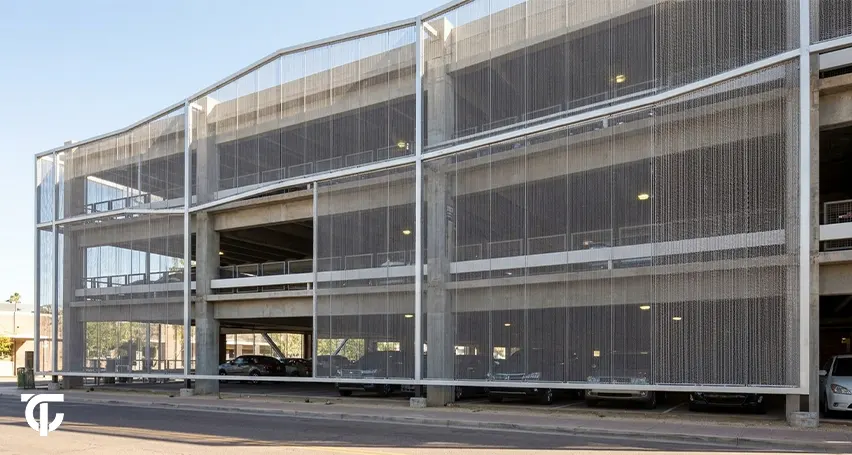
Mesh offers a different look.
According to Cascade Architectural, the material supplier, a retrofit façade on this parking structure uses more than 11,000 sq ft of stainless steel Fabricoil coiled wire fabric. The supplier describes the material as 1/2-inch, 13-gauge stainless steel wire fabric, used as architectural mesh cladding and screening.
Cascade’s report was published on January 19, 2026. These specifications and any benefits come from the supplier, not from independent testing.
✅ Staircases, Handrails and Balustrades
Back to the handrail from the start of this article. Stainless steel is used for handrails, guardrails, balustrades, stair components and their supporting fittings. It appears both indoors and outdoors, and its corrosion resistance and clean appearance explain much of the appeal. Grade selection matters most in three kinds of places:
- Outdoor areas.
- Coastal areas.
- Areas that are cleaned frequently.
Appearance alone doesn’t make a railing safe. Safety depends on the complete design, installation, and compliance with applicable rules. Dimensions, anchorage, and applicable building regulations must all be designed correctly. Choosing stainless steel for the rail is only one part of that.
✅ Doors, Windows and Architectural Fittings
Some stainless steel gets touched every day. Door hardware, handles, hinges, frames, trims, window fittings and decorative profiles all fall into that group. These are visible details, and they’re also components exposed to regular handling.
Finish does a lot of the work here. A brushed handle and a polished one can come from the same grade yet suit different design aims. The finish you specify shapes the architectural appearance, and it also affects how the surface wears and shows marks.
Two checks come before specifying fittings:
- The environment. An interior door handle and a fitting on an exposed exterior wall face different conditions.
- The adjacent materials. Stainless steel fittings often sit against other metals, timber, glass or masonry. Check compatibility with whatever touches them; a later subsection explains why, especially with dissimilar metals.
✅ Plumbing, Water Supply and Drainage Systems
Behind the walls, stainless steel appears in water pipes, fittings, connectors and drainage components. Selected plumbing equipment is also made from it.
Corrosion resistance and hygiene-related benefits can matter in these uses, where appropriate. But “where appropriate” is the key phrase. Water isn’t the same everywhere, and neither are the systems carrying it. Grade selection therefore depends on the actual operating conditions:
- Water chemistry.
- Chloride concentration.
- Temperature.
- The system’s wider operating conditions.
Installation matters too. Correct installation and avoiding contamination are part of getting the performance you expect. A pipe made from a suitable grade can still be let down by poor handling.
One more point on scope. Not every stainless steel grade suits every drinking-water or wastewater application. The grade has to match the system it serves.
✅ Stainless Steel Rebar in Concrete Structures
Reinforced concrete uses steel bars, called rebar, embedded inside the concrete. Stainless steel reinforcement bars can serve this purpose.
The reason to choose them is corrosion resistance. Stainless steel rebar is meant to improve resistance to reinforcement corrosion in demanding exposure conditions. Potential applications include:
- Marine structures.
- Bridge decks.
- Structures exposed to de-icing salts.
- Components where future repair is difficult.
Still, ordinary reinforcing steel remains widely used. Stainless steel rebar is a selective material choice, not a default one, and it isn’t necessary in every concrete structure.
Cost enters the decision. Its initial material cost may be higher, so the choice should weigh exposure, durability requirements, and lifecycle cost together.
Its scope also has limits. Stainless steel rebar addresses reinforcement corrosion. It doesn’t prevent every possible cause of concrete deterioration.
✅ Fasteners, Bolts, Anchors and Connectors
Small parts do big jobs. Stainless steel bolts, nuts, screws, anchors, brackets and connectors are used in façade fixing systems, handrails, external fittings and structural connections.
Fasteners deserve the same grade thinking as larger components. The grade of a fastener and the grade of the parts it joins need to be compatible. A fastener is only part of a joint, and the whole joint has to work together.
Galvanic corrosion is the main risk to understand. It can occur when dissimilar metals are in electrical contact in a suitable electrolyte. An electrolyte is a liquid that can carry an electrical charge, such as water carrying dissolved salts. Under those conditions, one of the two metals can corrode faster than it otherwise would.
Reducing that risk comes down to detailing:
- Correct detailing of the joint.
- Isolation where it’s needed.
- Correct fastener specification.
So you can’t use stainless steel fasteners with every other metal without checking compatibility first. A quick check at specification stage is far easier than a repair later.
✅ Interior and Decorative Applications
Inside the building, stainless steel moves from structure and fixings to surfaces people see and touch. Typical examples include:
- Lift and escalator panels.
- Wall panels and decorative trims.
- Kitchen and washroom fittings.
- Counters, fixtures and other interior components.
Finish defines the look. Brushed, polished, and patterned finishes each give a different appearance.
Cleaning needs to be discussed with care. How well a surface resists fingerprints, staining or surface marks varies by finish and environment. A busy lift panel and a washroom fitting won’t behave the same way, so no single finish suits every setting.
✅ Bridges, Tunnels and Related Infrastructure
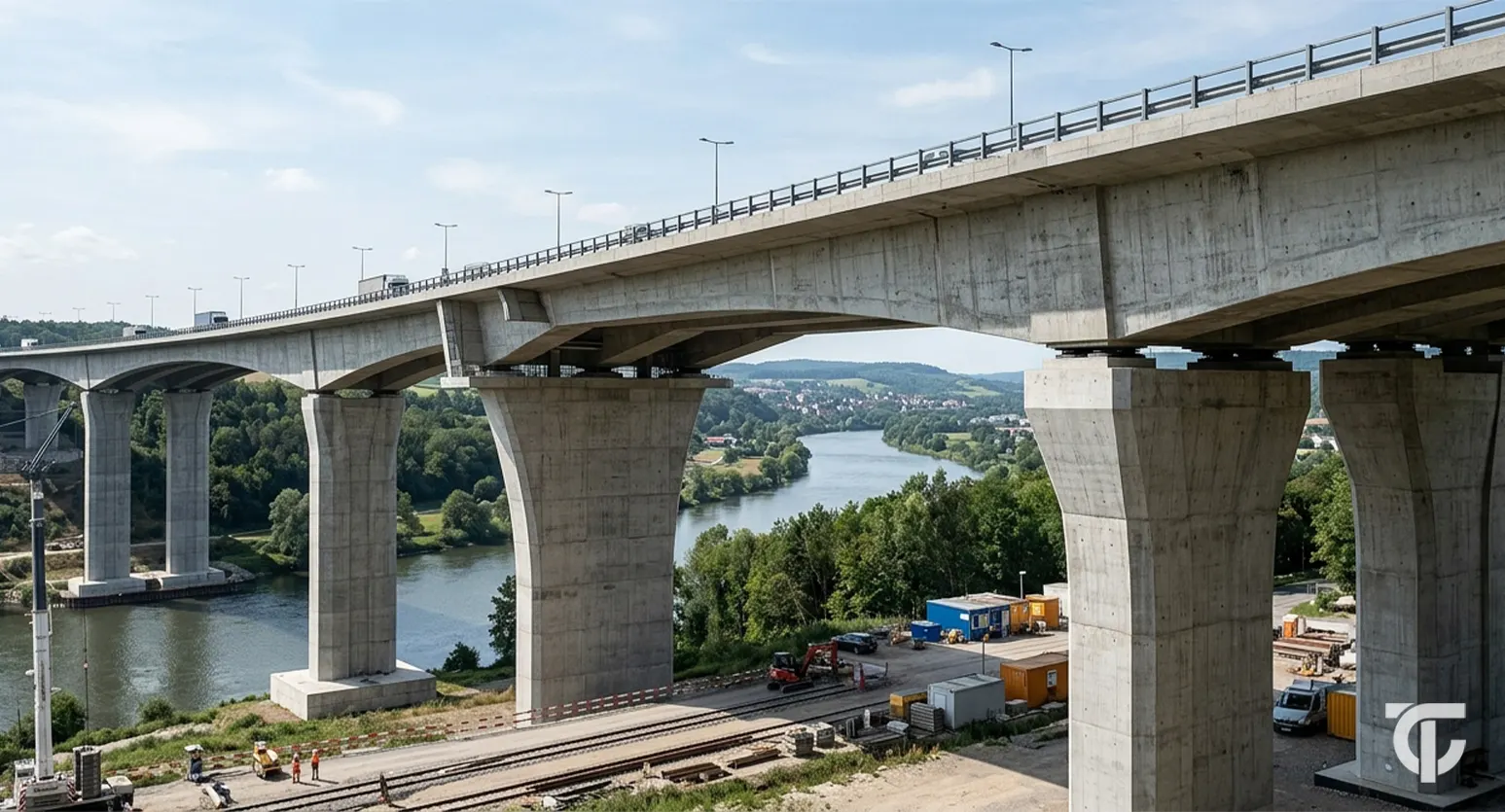
This guide focuses on buildings, so this subsection stays short. Stainless steel also appears in selected bridge components, pedestrian structures, tunnel fittings, exposed fixings and infrastructure reinforcement.
The reason is similar to the one in buildings. Corrosion resistance or reduced maintenance access can be important where components are hard to reach.
It’s used selectively, though. Not every bridge or tunnel is built from stainless steel.
Benefits of Using Stainless Steel in Construction
Why do designers, engineers, and builders choose stainless steel when other materials are available?
The reasons are practical, and they rarely come down to one factor. Stainless steel earns its place in building construction through a mix of properties. This section looks at those properties one by one. It doesn’t repeat the application list from the previous section. It explains why those applications make sense.
Corrosion Resistance
Corrosion resistance is the property stainless steel is best known for. It comes from the chromium-rich passive film described earlier, which slows corrosion of the metal underneath. In many atmospheric and building environments, that film gives stainless steel useful protection.
Grade selection decides how far that protection goes. Take chloride exposure. In many chloride-containing environments, 316 can outperform 304 because of its molybdenum content. A handrail near the sea and a handrail in a dry lobby may both be stainless steel, yet the grade that suits one may not suit the other.
Resistance isn’t the same as immunity. Pitting, crevice corrosion, and other forms of corrosion can still occur. The benefit is real, but only when the grade, the design, and the environment line up.
Strength and Durability
Strength varies a lot across the stainless steel range. Mechanical properties depend on the family and the grade, so there’s no single strength figure for “stainless steel”.
In selected building components, stainless steel can provide useful strength and durability. Duplex grades such as 2205 can offer higher strength than common austenitic grades. That’s one reason they’re considered for specialised structural or architectural uses.
Not every grade is stronger than carbon steel, and strength alone doesn’t decide how long a component lasts. Long-term performance depends on several things together:
- The design.
- The loads the component carries.
- The connections.
- The exposure conditions.
- The quality of fabrication.
Low Maintenance Requirements
Maintenance is often where stainless steel pulls ahead of other options. In suitable environments, it may need less protective coating work than some alternative materials. A painted or coated surface needs its protection kept up over time, whereas stainless steel relies on its own passive film.
“Low maintenance” doesn’t mean “no maintenance,” though. Cleaning is still necessary where dirt, salt, pollution, or other deposits build up. Surface finish and building geometry both influence how much cleaning is needed.
Design details can undo the benefit. Poor detailing can trap water and contaminants, and trapped moisture and deposits increase corrosion risk. A well-chosen grade on a poorly drained detail can still cause problems.
Appearance and Design Flexibility
Architects pick stainless steel partly because it looks good, and partly because it can be shaped in many ways. Finishes range widely:
- Polished.
- Brushed.
- Patterned.
- Other architectural finishes.
Designers can aim for reflective or non-reflective surfaces. The mirror-polished roof panels on the OWO Courtyard Pavilion, covered earlier, show one end of that range.
Forming adds more options. Stainless steel can be shaped into panels, tubes, profiles, and custom components. It also works across styles, appearing in both contemporary and traditional architectural designs.
Recyclability and Sustainability
Stainless steel can be recycled repeatedly without losing its fundamental material properties. Scrap can re-enter stainless steel production. Combine that with a long service period, and material longevity and recovery can support resource efficiency.
Two recycling figures often appear in discussions of this topic, and they measure different things:
- End-of-life recycling: World Stainless reports that approximately 95% of end-of-life stainless steel is collected and recycled.
- Recycled content: The association also reports that new stainless steel contains around 48% recycled scrap on average.
The first figure describes what happens to stainless steel at the end of its life. The second describes what goes into new stainless steel. They aren’t interchangeable. The 95% figure doesn’t mean 95% of all stainless steel is recycled into new stainless steel.
Both are global industry figures. They aren’t specific to the USA, the UK, or Europe.
Longevity belongs in this discussion too. World Stainless reports that stainless steel products remain in use for more than 20 years on average. That’s an average across stainless steel products. It isn’t a guaranteed service life for a roof, façade, reinforcement bar, or structural component.
Sustainability also needs a wider view than recycling alone. A fair assessment looks across the full lifecycle:
- Raw material extraction.
- Manufacturing.
- Transportation.
- Use.
- Maintenance.
- End-of-life recovery.
For that reason, comparing stainless steel with another material on energy or emissions needs comparable lifecycle assessment data for the actual products. Recyclability alone doesn’t settle that question.
Disadvantages and Limitations of Stainless Steel in Construction
Stainless steel isn’t a perfect material. It has real strengths, but it also comes with costs, risks, and conditions designers and builders need to understand.
This section covers five limitations. Knowing them helps you judge when stainless steel fits a component and when another material might do the job better.
Higher Initial Material Cost
Stainless steel often has a higher initial material cost than commonly used carbon steel. How much higher depends on several things:
- The grade.
- The thickness.
- The product form.
- Market prices.
- Fabrication.
- Supply.
Because so many factors are involved, there’s no single price gap to quote. Any fixed percentage would be a guess.
A higher purchase price doesn’t automatically mean a higher total lifecycle cost. It doesn’t automatically mean a lower one either. A fair comparison looks beyond the supply price to:
- Fabrication.
- Installation.
- Cleaning.
- Maintenance.
- Repair.
- Replacement.
The answer changes from project to project, so the comparison has to be made for the actual component and its conditions.
Risk of Pitting and Crevice Corrosion
Stainless steel resists corrosion, but it can still suffer localised corrosion. Chlorides are the usual trigger because they can damage the passive film. Two forms matter most:
- Pitting corrosion: Attack at local weak points in the passive film, which creates small pits in the metal.
- Crevice corrosion: Attack that can develop in narrow gaps, beneath deposits, under fasteners, or around poorly designed joints.
Conditions can make either one more likely. Higher temperatures and accumulated deposits can increase the risk.
Think of a bolted bracket on an exposed wall. The gap under the bolt head is a shielded area where salt and moisture can collect. A grade that performs well on open, easily rinsed surfaces may behave differently in that gap.
The right grade and sound design reduce this risk. They don’t guarantee immunity.
Fabrication and Welding Requirements
Fabrication means cutting, forming, machining, and welding. Stainless steel needs suitable methods and procedures for all of these, and a careless job can reduce the performance the material was chosen for.
Welding is a good example. It can create heat tint, which is discoloration around the weld, along with other surface changes. Those changes may need attention before the surface performs as intended.
Contamination is another risk. Ordinary carbon steel tools and grinding debris can leave iron on a stainless steel surface and cause rust staining.
So proper cleaning and post-weld treatment may be necessary, depending on the application. Fabricators must also use suitable procedures, tools, and consumables. Consumables are the materials used up in the process, such as welding filler.
Surface Staining and Cleaning Needs
Stainless steel can still stain. It may develop tea staining, discolouration, or rust staining. Tea staining is a surface discolouration associated with environmental deposits and exposure. Several causes can sit behind these problems:
- Environmental deposits.
- Salt.
- Pollution.
- Poor cleaning.
- Contamination.
Surface condition, finish, and exposure all influence how a surface performs. For that reason, cleaning and preventive maintenance remain important, even for a material chosen to reduce upkeep.
Thermal Movement and Design Considerations
All building materials move with temperature, and stainless steel is no exception. It expands and contracts as temperatures change, and the amount of thermal expansion varies by grade.
The effect is easiest to see in long runs of material. Designers should consider movement in long panels, cladding, roofing, and connections. Allowing for that movement is part of good design.
Incorrect detailing can cause problems. If the movement has nowhere to go, it can cause distortion, stress, or connection problems.
The exact expansion figure depends on the specific grade and temperature range, so it should come from verified data for the material actually being used.
Factors to Consider When Selecting Stainless Steel for Construction
The earlier sections explained what stainless steel is, which grades exist, and where it’s used. This section turns that into practical guidance. It walks through the questions that should be asked before stainless steel is chosen for a component.
This isn’t a design method. Qualified professionals and the project’s applicable standards handle actual selection and specification.
Environmental Exposure
Start with the surroundings, because they decide most of what follows. Designers should assess:
- Whether the component is indoors or outdoors.
- Coastal or marine conditions.
- Chloride exposure from seawater or de-icing salts.
- Industrial or urban pollution.
- Temperature and humidity.
- Water, cleaning chemicals, and surface deposits.
Why does this matter so much? Because the same grade can behave very differently in two places. A grade suitable for an interior fitting, such as a lift panel in a dry lobby, may not suit an exposed coastal façade. The façade has salt, moisture, and pollution, while the lobby does not.
Grade and Corrosion Resistance
Once the environment is clean, match the grade to the actual exposure. Here’s how the earlier grade discussion applies in practice:
- Where chloride exposure is relevant, compare 304 and 316.
- For specialist, demanding applications, consider duplex grades.
- Don’t choose a grade just because it’s labelled “stainless steel.” The label describes a whole family of alloys, not a performance level.
Some environments are unusually aggressive. In those cases, seek corrosion expertise rather than relying on general guidance. A general article can’t judge a specific, severe exposure.
Strength and Structural Requirements
Strength questions begin with the component’s job. Identify its function and the design loads it must carry. Then consider the mechanical properties of the exact grade and product form, since those properties vary. Several other factors also shape the outcome:
- Connections and joints.
- Fabrication.
- Buckling, which is a member bending or bowing under load, and serviceability requirements, where relevant.
Qualified professionals must design structural members to the applicable standards. That applies regardless of which material is chosen. For stainless steel, the dedicated standards mentioned earlier are the starting point for designers.
A note on fire performance. Stainless steel isn’t fireproof. Its strength and stiffness change as temperature rises. How a stainless steel member performs in a fire depends on:
- The grade.
- The member’s geometry.
- The loading.
- The temperature exposure.
- Any protective system.
Structural fire design must follow the applicable building codes and engineering standards. Stainless steel doesn’t automatically provide better fire protection than carbon steel.
Also keep two ideas apart: A material’s fire behaviour and a building component’s fire resistance aren’t the same thing.
Surface Finish and Fabrication
Finish affects more than looks. Choose it based on appearance, cleaning, and exposure. Brushed, polished, and other specified finishes each behave differently in use.
Fabrication choices belong in the same conversation. Think about the welding, cutting, forming, and joining the component will need. Contamination is a particular concern, so prevent it from carbon steel tools and handling equipment.
Where the application and process call for it, consider post-weld cleaning, pickling or passivation. These treatments differ, and a later section explains how.
Initial Cost and Lifecycle Cost
Price comparisons go wrong when they stop at the supply cost. For a fair view, compare the following:
- Material supply and fabrication costs.
- Installation.
- Maintenance, cleaning and inspection.
- Access costs, if the component is difficult to reach.
- Repair and replacement implications.
Lifecycle costing brings these together. It compares alternatives over an appropriate period, not just at purchase.
Don’t assume the outcome in advance. Stainless steel doesn’t always win on lifecycle cost. It depends on the project.
Maintenance and Cleaning Requirements
Think about upkeep at the design stage, not after handover. Consider how easily the component can be inspected and cleaned. Avoid designs that trap water, dirt, and salt deposits. Questions to ask include:
- Is there drainage?
- Can someone reach the surface to clean it?
- Does the finish suit the expected cleaning frequency?
When cleaning does happen, use methods appropriate for stainless steel. Inappropriate cleaners or tools can damage or contaminate the surface.
Connections, Fasteners and Galvanic Compatibility
Joints are where many problems start, so check compatibility between stainless steel and adjoining metals. As covered earlier, dissimilar metals in electrical contact in the presence of an electrolyte can create galvanic corrosion conditions. Two points guide the detailing:
- Consider appropriate separation, isolation, or detailing between the metals.
- Design joints to avoid narrow, poorly drained crevices.
Be wary of simple fixes. Insulating washers don’t automatically solve every galvanic or crevice corrosion issue. The complete joint design and the exposure both have to be assessed.
Stainless Steel Fabrication, Installation and Maintenance
Choosing the right grade is only part of the job. How the material is fabricated, handled, and kept clean also affects performance. This section covers those practical points, from the workshop to routine cleaning.
Stainless Steel Fabrication
Fabrication covers cutting, bending, forming, drilling and machining. Each step shapes the finished component, and each one can affect the surface.
Cleanliness comes first. Tools and work surfaces need to be clean and suitable for stainless steel. The main worry is cross-contamination from carbon steel. If carbon steel particles end up on a stainless steel surface, they can cause rust staining later.
Storage and handling matter just as much as the cutting itself. A sheet can leave a well-run workshop in good condition and still pick up contamination on its way to site.
Procedures should also suit the selected grade. A method that works for one grade isn’t automatically right for another.
Stainless Steel Welding
Welding joins components, and it’s also where the surface is most at risk. Several points need attention:
- Procedure and filler material. Both must be selected to suit the application. No single welding method suits every stainless steel grade.
- Shielding and joint design. Shielding protects the weld area during welding. Suitable joint design matters alongside it.
- Heat tint and weld contamination. Welding can leave heat tint, the discolouration around the weld, along with contamination.
- Post-weld cleaning. Where the application requires it, the weld area needs cleaning afterwards.
Corrosion-sensitive applications call for extra care. Incomplete penetration and poorly designed crevices should be avoided, since crevices are where crevice corrosion can develop.
This article doesn’t cover welding settings. Those depend on the grade, product, and procedure, and belong in a qualified welding specification.
Passivation, Pickling and Surface Finishing
These terms sound similar but describe different processes. They shouldn’t be used interchangeably.
- Passivation: a treatment intended to remove free iron or contaminants and establish a clean passive surface, where appropriate. It isn’t a substitute for correct grade selection or cleaning.
- Pickling: chemical cleaning used to remove oxide scale and heat tint. It generally involves a more aggressive treatment than passivation.
- Mechanical finishing: processes such as brushing or polishing that achieve a specified surface appearance.
- Electropolishing: an electrochemical process that removes a thin surface layer and can improve surface finish.
Which applies depends on the application and the specified process. A post-weld surface that needs pickling is a different case from a brushed panel that only needs its finish applied.
Stainless Steel Cleaning Methods
Routine cleaning is simple, and it’s one of the main ways to keep a stainless steel surface performing well. The aim is to remove dust, dirt, salt, and other deposits before they sit on the surface.
For routine cleaning, warm water and mild detergent are suitable where appropriate. Rinse afterwards and dry the surface when needed. A few habits help:
- Use cleaning products suitable for the specified finish.
- Avoid ordinary steel wool and carbon steel brushes, which can contaminate the surface.
- Follow the product manufacturer’s instructions for any specialised cleaning.
Is Stainless Steel a Good Choice for Building Construction?
Sometimes, depending on the component. Stainless steel can be a suitable choice where a building part needs corrosion resistance, durability, a particular appearance, or reduced maintenance. It’s especially useful where the environment or the component’s function justifies those properties. It isn’t automatically the best material for every part of a building. Several things shape the decision:
- The grade, and whether it matches the exposure.
- The design, including drainage and joints.
- The quality of fabrication.
- Initial cost and lifecycle requirements.
Other materials can win in some cases. Carbon steel and other materials may be more economical or better suited to certain applications, especially where stainless steel’s particular benefits aren’t needed.
So the practical conclusion is this: choose stainless steel when its performance benefits justify the material and lifecycle costs for the specific project.
Final Thoughts
Stainless steel isn’t one uniform material. It’s a family of corrosion-resistant steel alloys, and the differences between its grades matter as much as the similarities. Here are the points that should guide any decision:
- Performance depends on several things together. Composition, grade, environment, and surface condition all play a part.
- The range of uses is wide. It covers building exteriors, interiors, fittings, plumbing, reinforcement, and selected structural components.
- Grade selection and fabrication matter. A suitable grade can still be let down by poor detailing, contamination or careless welding.
- Benefits need weighing against costs. Initial cost, design requirements and maintenance all belong in the comparison.
The takeaway is simple. Start with the component and its conditions, not with the material. If stainless steel’s performance benefits justify the material and lifecycle costs for that specific project, it can be a sound choice. If they don’t, another material may serve better.
Frequently Asked Questions
Is stainless steel used in building construction?
Yes, stainless steel is used in construction, though selectively. It appears in selected structural components, façades, roofing, handrails, plumbing, fasteners, fittings, and reinforcement. The grade depends on the application and the exposure conditions.
What is stainless steel used for in construction?
Common uses include cladding, railings, roof panels, plumbing, connectors, and architectural fittings. It’s also used in selected reinforcement and selected structural components.
Which grade of stainless steel is best for building construction?
There’s no single best grade. Grade 304 is common for many general applications. Grade 316 is often considered for more chloride-exposed conditions. Duplex 2205 may suit selected demanding applications. The right choice depends on the environment, design, and specification.
What are the advantages and disadvantages of stainless steel in construction?
Advantages include corrosion resistance, durability, appearance, and recyclability. The disadvantages are a higher initial cost in many cases, possible localised corrosion, fabrication requirements and cleaning needs.
Does stainless steel rust or corrode in outdoor construction applications?
Yes, it can corrode under certain conditions. Chloride exposure, deposits, crevices, contamination and an unsuitable grade can all cause staining or corrosion. The right grade, sound detailing, and maintenance reduce the risk, but they don’t make the material immune.