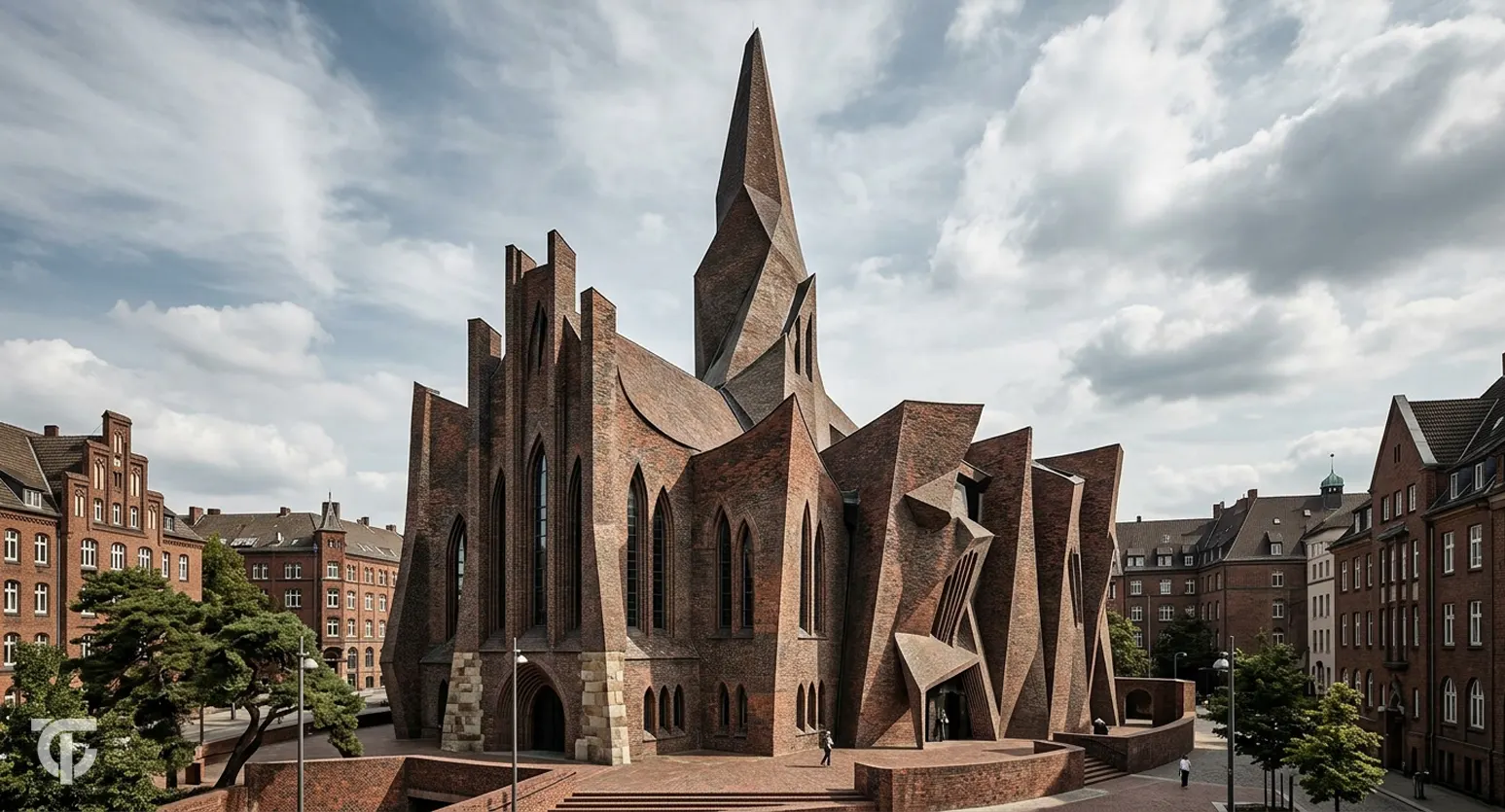

Have you ever looked at a building structure and thought, “How did they even build that?” Maybe that structure has twisting curves, floating glass walls, or shapes that look more like art than architecture. That’s the power of avant-garde architecture. A bold, rule-breaking design style that challenges everything we think of.
But here’s the real question!🤔
What Material Is Used For Avant-Garde In Architecture?
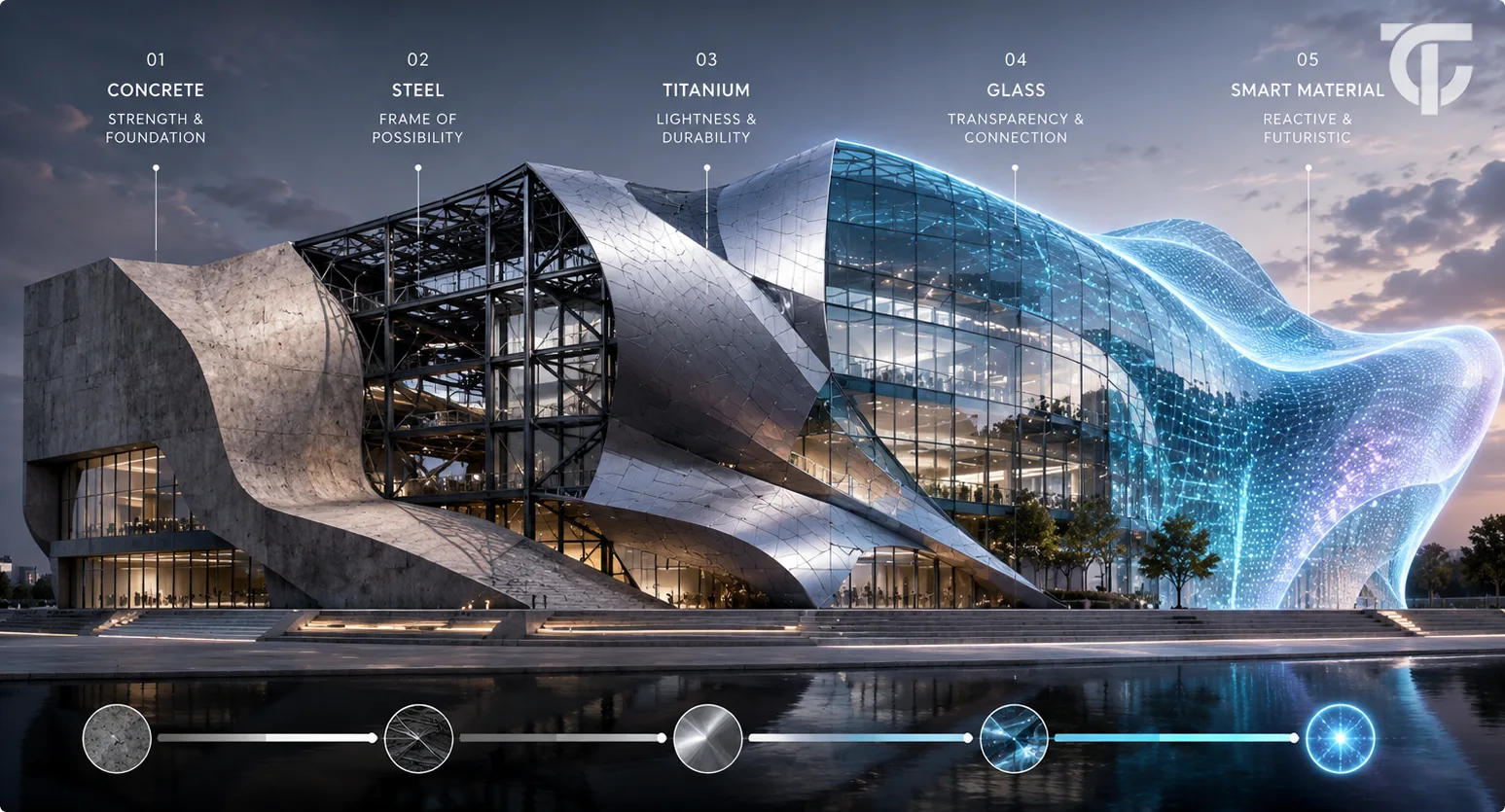
The answer isn’t simple. Avant-garde buildings don’t just look different, they’re made differently. From ultra-modern materials (like carbon fiber and glass fiber concrete) to bio-based innovations (like mycelium and recycled plastic), the materials themselves are part of the story.
Why does this matter?
Different materials are used for different purposes. Everything is made from materials, from how a building looks to how it functions to how it saves energy or supports sustainability goals; you can find materials everywhere. In fact, according to Architect Magazine, 68% of modern architectural firms are now using experimental materials to create one-of-a-kind designs.
What is Avant-Garde Architecture?
Avant-garde architecture isn’t just about creating eye-catching, aesthetically pleasing buildings; it’s a design approach that asks, “What if we design this differently?” 🤔
Means breaks down the old rules of architecture and tries out bold, creative, and new ways to build things.
The term “avant-garde” is a French military term meaning “advance guard”. In art and architecture, it refers to architects who are creative and innovative. These creators don’t follow trends; instead, they create designs that are ahead of their time.
A Brief Look at the Origins
Avant-garde architecture traces its roots to the early 20th century, when people began to question old ideas in art and culture. Movements like Modernism, Bauhaus, and Russian Constructivism played a significant role in shaping it. These architects and designers did not follow traditional styles characterized by ornamentation and symmetry. Instead, they focused on functionality, geometry, and experimental architecture as a form of cultural expression.
- Modernism introduced minimalism and functional design.
- Bauhaus fused art, design, and architecture, favoring industrial materials and clean lines.
- Russian Constructivists believed architecture should reflect modern life using glass, steel, and concrete as symbols of the future.
Each movement helped shape what we now call avant-garde architecture: a space where rules are bent, aesthetics are reimagined, and futuristic architecture begins to take form.
Materials as the Medium of Innovation
In traditional architecture, materials such as steel and concrete are primarily used to support structures. But in avant-garde architecture, materials are creative tools used to express bold ideas. A curved concrete wall, a glass structure that seems to float, or even a surface that reacts to sunlight; these are all architectural innovations that are only made possible by smart material choices. It’s not just about how a building looks; it’s about how the materials make impossible designs real.
Characteristics of the Avant-Garde approach in design
This approach to architecture breaks free from traditional design rules; it doesn’t follow a certain symmetry, design, contrast, or even style. It challenges everyone’s “normal” and leaves a lasting impression. Bends a new font every time, and makes its own new design, one that always stands out.
What Makes It Unique?
What makes the avant-garde approach truly unique is its artist’s approach, the way it sways in the air, filled with emotions ready to burst, like a brush desperately waiting to be wet with beautiful oil paint. Designs are often inspired by philosophy, personal stories, or even surreal imagination. It makes you feel again, live again, just like a cold breeze touching your face on a happy Sunday as you open your bedroom window.
To bring these ideas to life, architects rely on bold design choices, especially in materials. Traditional concrete or brick often can not support dreamlike forms. So designers substitute it with expressive, futuristic materials such as smart glasses, carbon fiber, and flexible composites. These allow buildings to respond to and breathe in the environment, approaching a feel that’s not just a style but a whole new way of experiencing space.
What material is used for Avant Garde in architecture?
The question “what material is used for avant-garde architecture?” stands at the core of any unconventional design. In avant-garde architecture, material choices are the baby steps taken to make a bigger move, so that the building can stand properly on its own feet. These materials must support sculptural freedom, align with futuristic ideals, and often challenge conventional ideas of sustainability and permanence.
👉🏽 Did You Know?
According to a Markets and Markets report, the smart material market in architecture is expected to reach $4.1 Billion by 2027.
This report highlights how rapidly material innovation is shaping the future of design, especially in avant-garde architecture, where forms, feelings, and function are deeply interconnected.
Key Materials Used
1. Glass Fiber Reinforced Concrete (GFRC)
To achieve complex, expressive shapes, architects often use Glass Fiber Reinforced Concrete [GFRC] for modern facades. It’s not only lightweight but strong, and can be molded into sculptural forms.
2. Steel
Steel remains essential for creating bold structural frames that support daring layouts and elevations.
3. Carbon Fiber
For lighter and futuristic structures, Carbon fiber is a top choice. It offers strength without bulk, making it ideal for cantilevers, curved forms, and other surfaces.
4. Cross-laminated timber (CLT)
Cross-Laminated Timber (CLT) is valued for its sustainability. As a renewable, prefabricated material, it’s used in many eco-conscious avant-garde projects that balance beauty and responsibility.
5. Mycelium
Materials like mycelium, a biodegradable fungus-based substance, are gaining popularity in bio-architecture. These are not just symbolic choices; they offer a new way to build in harmony with nature.
6. Ethylene Tetrafluoroethylene (ETFE)
ETFE, a thin, clear plastic, is another material that allows large, flexible, and transparent facades. Its feather-light weight makes it a leading lightweight construction material and an excellent transparent building material for innovative envelope design.
7. Smart Materials
Not to leave technology behind, it also plays a powerful role in this movement. Smart materials in construction, such as shape memory alloys and thermochromic surfaces, respond to touch, light, or heat. They shift color, shape, or even texture, making the building more interactive and alive.
8. Recycled Materials
Last but not least, many architects are turning to recycled building materials for creative reuse, by transforming waste into beauty.
Real Case Studies of Avant-Garde Architecture
Some of the world’s most iconic buildings are the living proof of how materials shape and support sculptural architectural forms. These real-life examples show how avant-garde goes beyond sketches; it mostly depends on the smart use of materials.
Guggenheim Museum in Bilbao, designed by Frank Gehry
Its flowing, metallic form is covered in titanium, chosen for its light weight, durability, and ability to reflect natural light like rippling water. Combined with limestone bases, this bold combination gives the museum its futuristic skin, something that is rarely achieved with traditional materials.
TWA Flight Center by Euro saarinen
This building is like it’s in motion, even while standing as still as a dead man. Its dynamic shape was made possible through thin-shell concrete, which allowed wide, sweeping curves, paired with glass to create open, light-filled interiors. The material didn’t just support the structure; it quite literally made the vision possible.
Eden Project in the UK
In more recent designs, The Eden Project in the UK uses massive ETFE biomes, lightweight, see-through domes that cover entire ecosystems. As a transparent building material, ETFE makes these structures both visually striking and energy efficient.
Heydar Aliyev Center in Baku, designed by Zaha Hadid
Its iconic wave-like shape flows without edges or corners. This was made possible through a steel structure and custom-molded GFRC [Glass Fiber Reinforced Concrete] panels. These materials enabled a fluid, seamless surface that looks more like a sculpture than a building.
Morpheus Hotel in Macau, designed by the late Dame Zaha Hadid
Morpheus Hotel is built from a web of aluminum cladding and concrete shell. Its exposed exoskeleton is not just for show; it’s a part of the building’s support system, fusing beauty and strength in one of the boldest expressions of avant-garde architecture today.
However, each of these projects proves only one thing: in avant-garde design, materials are more than just structures; they’re storytellers.
Emerging Trends in Avant-Garde Material Use
As the world evolves, avant-garde architecture evolves, and so does the material behind it. As the world grows and becomes more aware of the environment, things change. We’re seeing a shift towards smarter, greener, and more creative use of materials.
👉🏽 According to the World Green Building Council report, 40% of buildings will integrate smart eco-materials by 2030.
Although these changes might seem small or irrelevant in avant-garde architecture, these trends aren’t just changing how buildings look but also how they perform and connect with people.
Parametric design
One of the major trends is parametric design, where complex forms are created using algorithms. This method helps architects coordinate challenging material systems with extreme precision. Things like curves, twists, and layered surfaces are now built more easily and with more accuracy thanks to digital planning.
Digital fabrication & 3D printing
Digital fabrication and 3D printing are unlocking new possibilities. These tools allow architects to produce custom pieces, often with organic forms, that would likely be impossible to make by hand. With this, it is used to end all the limits to creativity, even the absence of tools.
Adaptive reuse
Another exciting shift is adaptive reuse, taking industrial or leftover materials and turning them into powerful architectural materials. Steel pipes, warehouse glass, and concrete panels are being reshaped into expressive designs, adding history and meaning to new spaces.
However, together, these trends point to a future where the avant-garde approach is even more creative than before. As said before, material isn’t just a tool anymore; it’s more of a vision, a start, a baby step.
How to Choose the Right Material for Avant-Garde Architecture
Choosing isn’t always easy, especially when it comes to things like materials for your dreamy buildings. One wrong move, and it can all drop to zero. Choosing the right material in avant-garde architecture is both an art and a science. Designers, architects, and even clients must balance beauty, function, and responsibility. It isn’t about looks; it’s about what works, lasts, and supports the building’s bold design goals.
Start by considering the following five key factors;
- Aesthetic Potential – Can the material bring your sculptural or surreal vision to life?
- Structural Strength – Can it hold complex forms securely?
- Cost & Availability – Does it fit your timeline and budget?
- Environmental Impact – Is it recyclable, natural, or low-emission?
- Maintenance and Durability – Will it survive weather and time?
To identify high-quality, good materials, look for performance indicators such as:
- Durability Rating for long-term wear and lifespan.
- Thermal and Acoustic Properties for comfort and energy control.
- For resistance to moisture, UV, and corrosion, especially in metals, consider metal coatings for rust prevention.
Using checklists makes it easier to compare materials and other things with other options. It helps you choose the right material for your design goals. For instance, if your project is curved and exposed to harsh weather, a flexible yet durable material like GFRC or coated aluminum may be the best construction material.
Think of every possible scenario in which your building could be negatively affected, and then use measures that can help avoid those issues.
Want to explore more architectural ideas and design innovations?
Continue exploring The Concrete Talk’s architecture articles, featuring expert coverage of design styles, innovative building materials, and modern construction concepts.
Final Thoughts
In the world of avant-garde architecture, material isn’t just used as a building block; it’s like the flow of the river, the heartbeat of design. From titanium and GFRC to mycelium, ETFE, carbon fiber, and smart materials, we have read how every choice matters, how it shapes not only a structure’s form but its meaning and message.
So now if you see someone asking, “What material is used for avant-garde in architecture?” you know they are asking for its story, its emotions, its future. Whether it’s the bold shine of steel, the soft curves of reinforced concrete, or the conscious touch of recycled plastics, each material opens a new door in the house of architectural innovation.
In this era of visionary architecture trends, material is no longer just a structure; it’s an expression, technology, and the future. The next masterpiece won’t just rise from steel and stone; it will be built, created from your imagination.